Key takeaways
- Creative testing helps you find what works and reduce wasted ad spend.
- Start with a clear goal and a defined audience before making any ads.
- Build angles, then hook and ad variations, and test them in a structured way.
- Measure, pick the winner, scale it, and refresh creative before it fatigues.
A creative testing framework for Meta ads is a simple system for testing different ad ideas to find out what drives the best results. Instead of guessing which video, image, hook, or message will work, you create multiple variations, run them to a defined audience, and measure performance.
The goal is not to create more ads for the sake of it. The goal is to learn what your audience responds to, then invest more in the creative that generates the strongest results.
Why Creative Testing Matters
Meta ads performance depends heavily on creative. A strong creative can improve attention, click-through rate, conversion rate, and return on ad spend.
Without testing, brands often keep spending on ads that do not perform. A simple testing framework helps you identify what works and reduce wasted ad spend.
What Creative Testing Can Improve
Creative testing can improve:
- Hook rate
- Click-through rate
- Conversion rate
- Cost per lead
- Cost per purchase
- Return on ad spend
- Creative longevity
- Audience insight
The more you test, the more you learn about what messaging, visuals, and offers resonate with your audience.
What Is a Creative Testing Framework?
A creative testing framework is a structured process for testing ad ideas. It helps you decide what to test, how to test it, and how to measure results.
A good framework includes:
- A clear goal
- A defined audience
- A set of creative variations
- A testing schedule
- A set of KPIs
- A decision rule
- A process for scaling winners
Without a framework, testing can become random and inefficient.
The goal is not to create more ads for the sake of it, but to learn what your audience responds to.
Step 1: Define the Goal
Before creating any ads, define the goal of the campaign.
Ask:
- Are we trying to get leads?
- Are we trying to get sales?
- Are we trying to get signups?
- Are we trying to get bookings?
- Are we trying to build awareness?
A clear goal helps you choose the right KPIs and creative angles.
Step 2: Understand the Audience
Identify the customer’s main pain point, desire, objection, and motivation. A good ad speaks to a specific person, not a generic audience.
Ask:
- Who is the ideal customer?
- What problem do they have?
- What result do they want?
- What objection do they have?
- What motivates them to buy?
The more specific the audience, the better the creative.
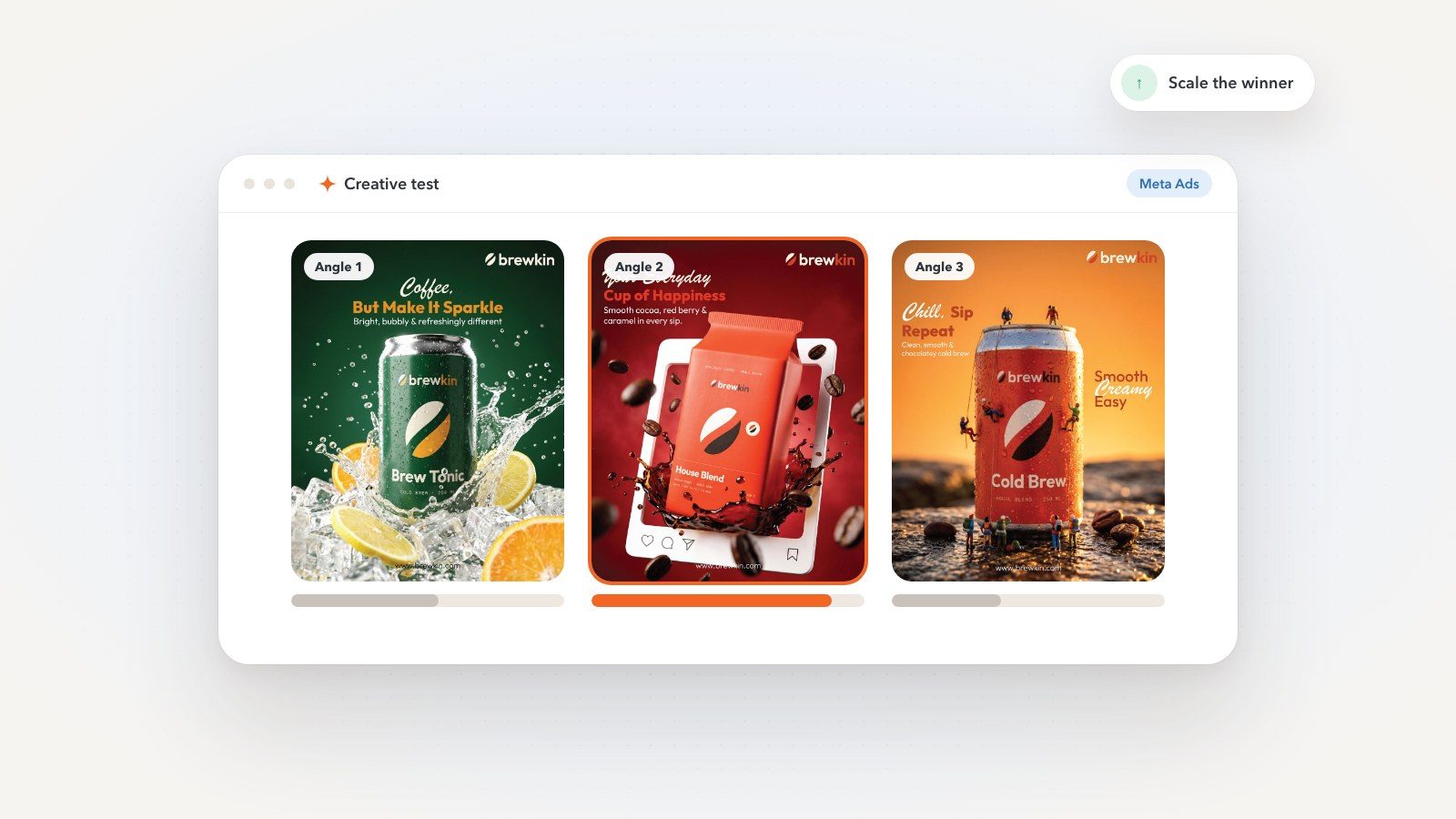
Step 3: Create Creative Angles
A creative angle is the main idea behind the ad. It is not just the product; it is the way you position the product in the customer’s mind.
Common creative angles include:
- Problem-solution
- Before-and-after
- Social proof
- Founder story
- Comparison
- Offer-focused
- Objection-handling
- Educational
- Lifestyle
- Urgency
Each angle can become multiple ad variations.
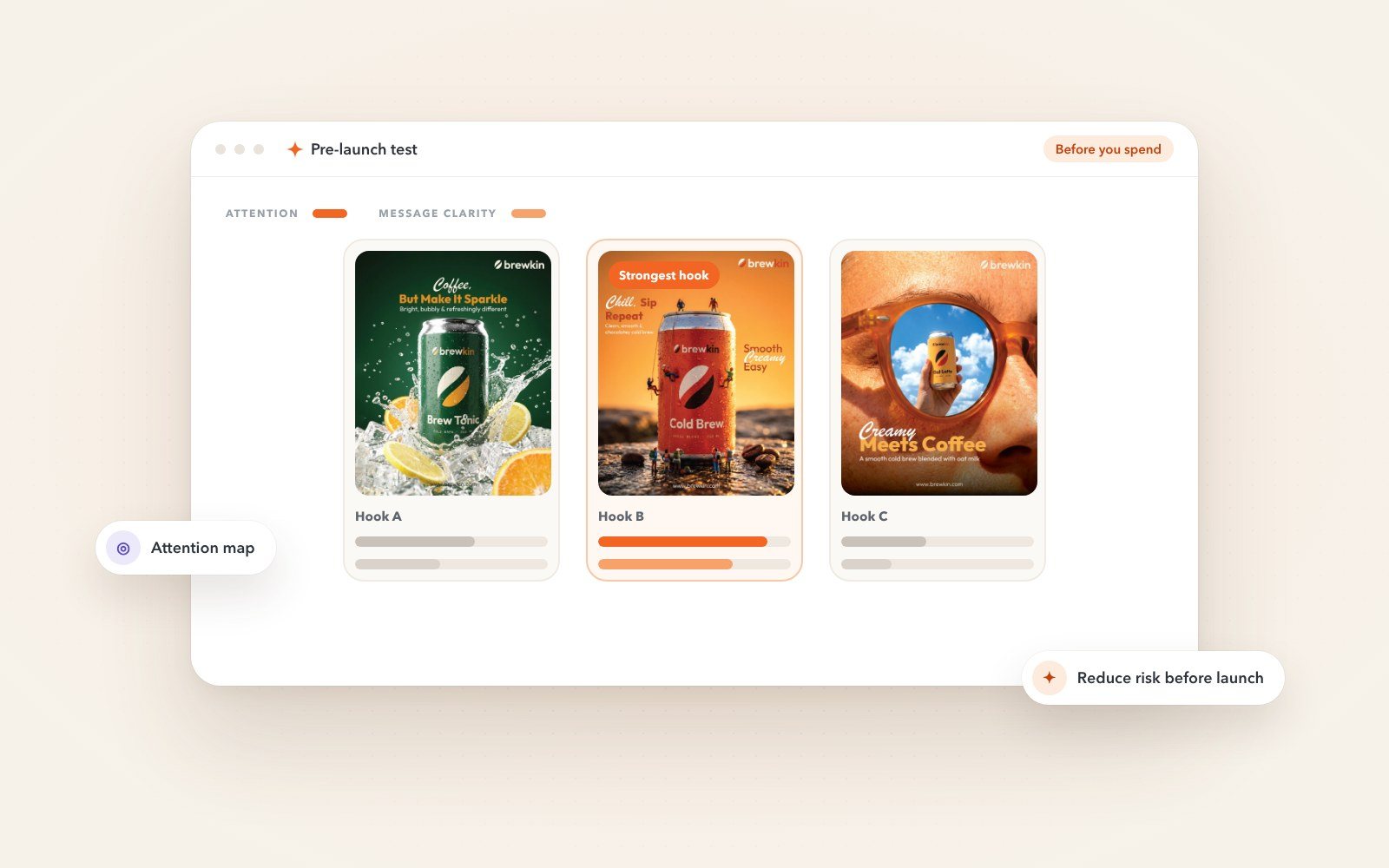
Step 4: Create Hook Variations
The hook is the first 1–3 seconds of the ad. Its job is to stop the scroll and make the viewer want to keep watching.
Create 2–3 hook variations for each creative angle.
For example, if the angle is “problem-solution,” you can create hooks like:
- “Still struggling to get leads from your ads?”
- “This is why your ads are not converting.”
- “Stop wasting money on ads that do not work.”
A strong hook should make the viewer feel that the ad is relevant to them.
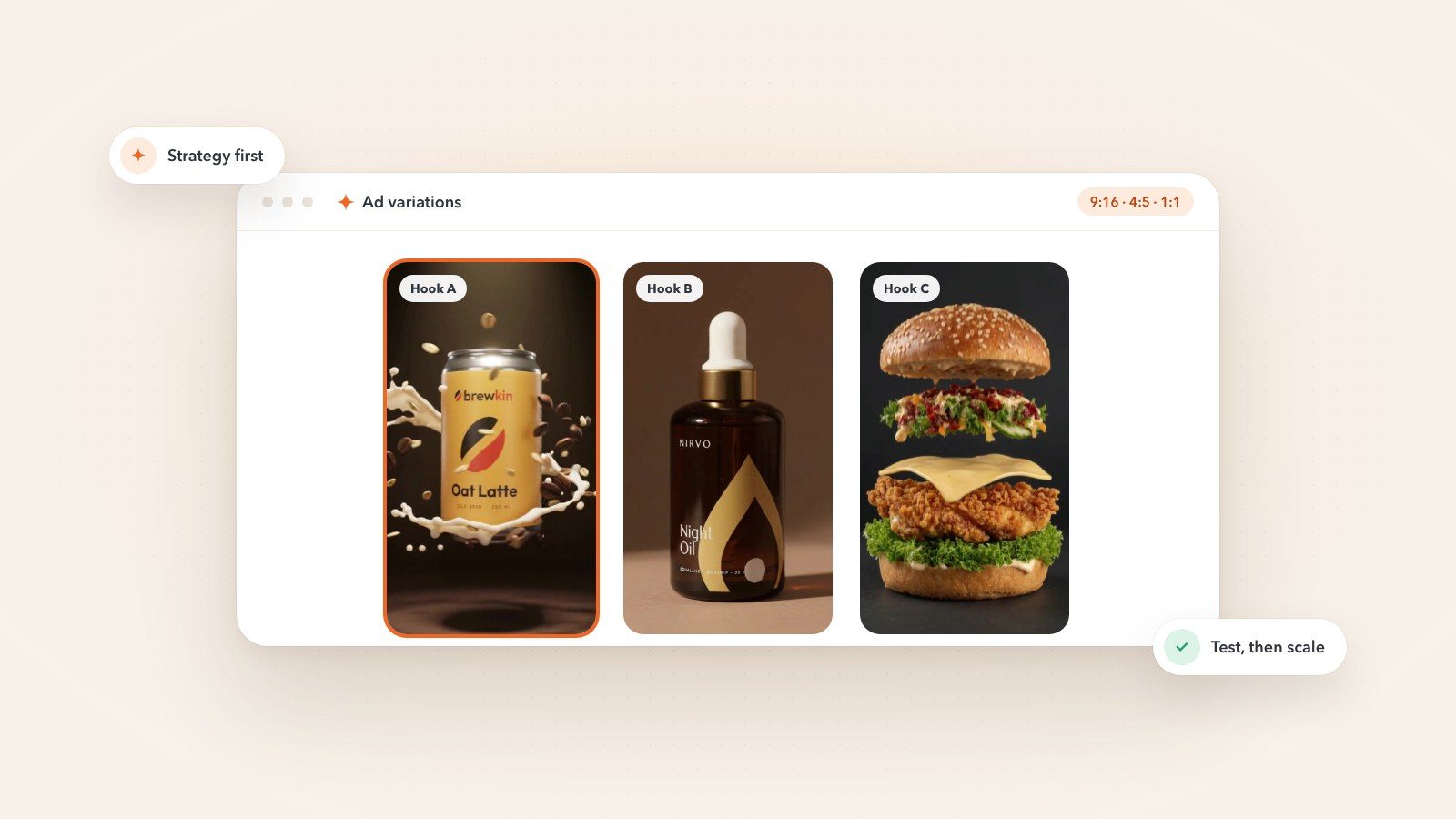
Step 5: Create Ad Variations
Once you have creative angles and hooks, create multiple ad variations.
A simple starting point is:
- 3–5 creative angles
- 2–3 hook variations per angle
- 1–2 CTA variations
- 2–3 platform formats
This means a brand may need 10–20 ad variations before it can understand what works best.
Step 6: Run the Test
Run the ads to a defined audience for a set period of time.
A simple testing schedule could be:
- Run the test for 3–7 days
- Use a consistent budget
- Avoid changing too many things at once
- Track performance daily
- Make decisions based on data, not opinions
The key is to keep the test clean. If you change too many variables at once, you will not know what caused the result.
Step 7: Measure Performance
Track these metrics to understand performance:
- Hook rate
- 3-second view rate
- Thumb-stop ratio
- Click-through rate
- Conversion rate
- Cost per lead
- Cost per purchase
- ROAS
- Creative fatigue
Do not judge an ad only by views. A video may get attention but fail to generate business results.
Step 8: Identify the Winner
After the test period, identify the winning creative.
Look for ads that have:
- High hook rate
- High click-through rate
- Low cost per result
- High conversion rate
- Strong ROAS
The winner is not always the ad with the most views. The winner is the ad that generates the best business result.
Step 9: Scale the Winner
Once you identify a winner, create more variations based on that creative.
For example, if a “problem-focused” hook performs better than a “product-focused” hook, create more ads around that problem. If a specific CTA performs better, test similar CTAs in future ads.
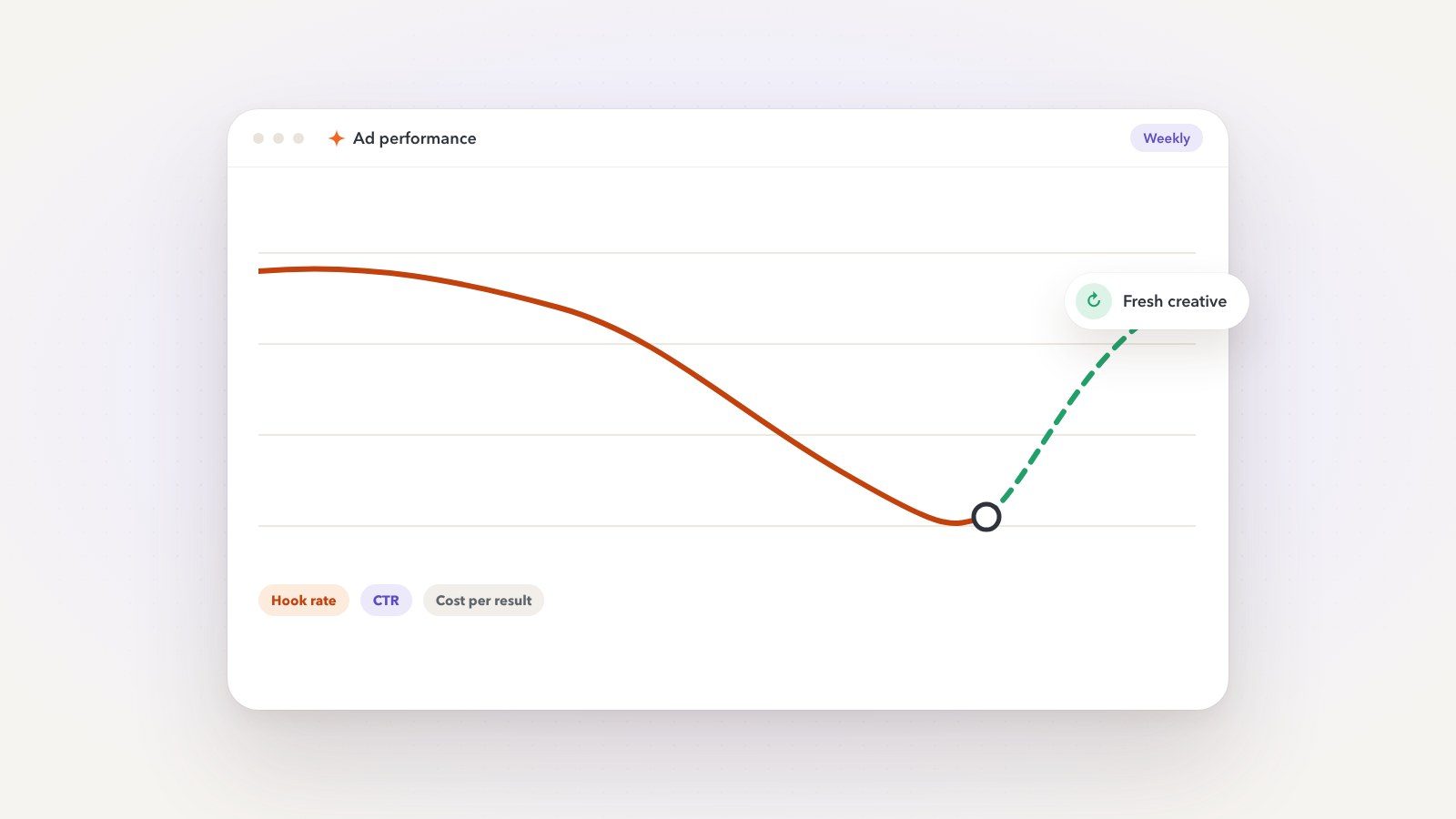
Step 10: Refresh Creative
Creative fatigue can reduce performance over time. Refresh creative regularly to keep the campaign strong.
A simple monthly target could be:
- 10–20 new ad variations for small brands
- 20–40 new ad variations for growing brands
- 40–80 new ad variations for high-spend brands
The exact number depends on ad spend, audience size, and campaign goals.
Common Mistakes to Avoid
Testing Too Many Variables
If you change too many things at once, you will not know what caused the result. Test one variable at a time.
Not Having a Clear Goal
Without a clear goal, you will not know what to measure. Define the goal before creating any ads.
Ignoring the Audience
A good ad speaks to a specific person, not a generic audience. Understand the customer’s pain point, desire, and objection.
Not Creating Enough Variations
One ad cannot tell you what works. Create multiple variations so you can learn which creative angle works best.
Not Measuring the Right KPIs
Do not judge an ad only by views. Focus on leads, sales, and return on ad spend.
How Asian Pixel Approaches Creative Testing
Asian Pixel uses a performance creative approach. The goal is not simply to create videos, but to create ads that support testing, learning, and business growth.
A strong creative testing system includes:
- Audience and offer analysis
- Creative angle development
- Hook variations
- Scriptwriting
- AI-assisted production
- Captions and on-screen text
- Brand-consistency checks
- Creative testing
- Performance reporting
This approach helps brands create more variations, test faster, and identify the messages that drive results.
Final Thoughts
A simple creative testing framework can help you find what works and reduce wasted ad spend. The goal is not to create more ads for the sake of it, but to learn what your audience responds to.
The best framework includes a clear goal, a defined audience, creative angles, hook variations, ad variations, testing, measurement, and scaling.
If you want to get better results from Meta ads, focus on the fundamentals: a clear offer, a specific audience, a strong hook, a believable message, and continuous testing.