Key takeaways
- Cost depends on production style, complexity, talent, location, editing, revisions and the mix of AI and traditional work.
- AI-assisted ads usually cost less per video, which makes it cheaper to test several versions.
- Budget for enough variations to learn from, not for one perfect video.
- Judge cost against results: cost per lead or sale matters more than cost per video.
The cost of a video ad in 2026 depends on the production style, creative complexity, talent, location, editing, revisions, and whether the ad is made with AI, traditional production, or a mix of both. A simple social video ad can cost much less than a premium brand film, but the real cost should always be measured against the results it generates.
For many brands, the most important question is not “How much does a video ad cost?” but “How much does it cost to generate a lead, sale, or measurable business result?” A cheaper ad that does not convert can be more expensive than a higher-quality ad that drives consistent revenue.
What Affects Video Ad Cost?
Video ad pricing is not based only on video length. A 30-second ad can be cheap or expensive depending on what is required to make it perform.
The main cost factors include:
- Creative strategy
- Scriptwriting
- Concept development
- Talent or creator fees
- Filming location
- Equipment and crew
- Product styling
- AI tool usage
- Voiceover
- Music licensing
- Editing
- Motion graphics
- Captions
- Revisions
- Platform-specific versions
- Usage rights
A strong video ad system includes strategy, production, testing, and reporting—not just editing.
Video Ad Pricing Models
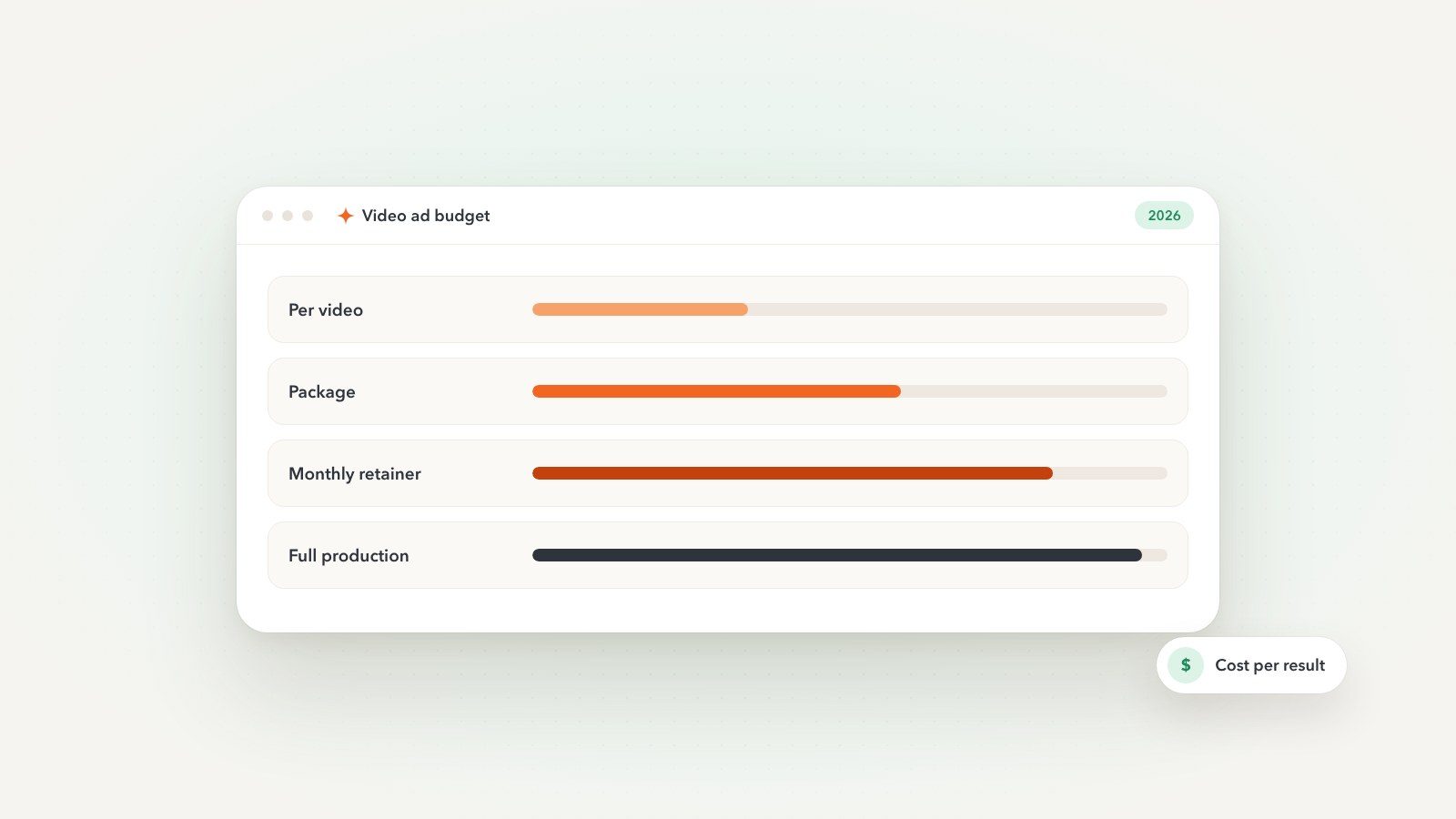
There are several common ways agencies and creators price video ads.
1. Per-Video Pricing
Per-video pricing means the client pays for each individual video. This model is simple, but it can become expensive if the brand needs many variations for testing.
It works best for:
- One-off ads
- Simple product videos
- Small businesses
- Brands testing a single offer
2. Package Pricing
Package pricing means the client pays for a defined set of deliverables, such as 10 videos, 5 hooks, and 3 platform formats.
It works best for:
- Product launches
- Seasonal campaigns
- Brands that need a fixed scope
- Businesses that want predictable pricing
3. Monthly Retainer
Monthly retainer pricing means the client pays a fixed amount each month for ongoing creative production, testing, and optimization.
It works best for:
- Brands running ads continuously
- E-commerce stores
- SaaS companies
- Local service businesses
- Brands that need regular creative refreshes
A monthly retainer is often the best model for performance creative because it supports ongoing testing and improvement.
4. Performance-Based Pricing
Performance-based pricing means the agency receives a base fee plus a bonus based on results, such as leads, sales, or ROAS.
It works best for:
- Brands with strong tracking
- Businesses with proven offers
- Companies that can share ad account data
- Longer-term partnerships
However, performance-based pricing can be risky if the client’s offer, landing page, or sales process is weak.
A higher-quality ad that generates consistent leads or sales can be more valuable than a cheaper ad that does not convert.
AI Video Ad Cost in 2026
AI video ads usually cost less per variation because AI can reduce the need for repeated filming. A brand can create multiple variations from one product shoot, one script structure, or one set of visual assets.
What Is Included in AI Video Ad Pricing?
AI video ad pricing may include:
- Creative strategy
- Audience research
- Ad angle development
- Scriptwriting
- Hook variations
- AI voiceover
- AI visuals
- Avatar creation
- Editing
- Captions
- Platform-specific versions
- Revisions
- Performance reporting
AI can speed up production, but it does not remove the need for creative direction, brand consistency, and quality control.
AI Video Ad Price Ranges
AI video ad pricing can vary widely depending on the market, agency, and scope.
These ranges are general estimates. The final price depends on the level of strategy, number of variations, revisions, and quality of production.
Traditional Video Ad Cost in 2026
Traditional video production usually costs more because each shoot requires planning, crew, talent, equipment, location, and post-production. However, it can create a more premium and controlled final asset.
What Is Included in Traditional Production Pricing?
Traditional production pricing may include:
- Pre-production planning
- Creative brief
- Scriptwriting
- Casting
- Location scouting
- Equipment rental
- Crew
- Talent fees
- Product styling
- Filming
- Editing
- Color grading
- Sound design
- Music licensing
- Revisions
- Usage rights
Traditional production can be worth the investment when the brand needs a premium, high-control asset that will be used across many channels.
Traditional Video Ad Price Ranges
Traditional video ad pricing can vary widely depending on the market, agency, and scope.
These ranges are general estimates. The final price depends on the level of strategy, talent, location, and production quality.
How Many Videos Should a Brand Create?
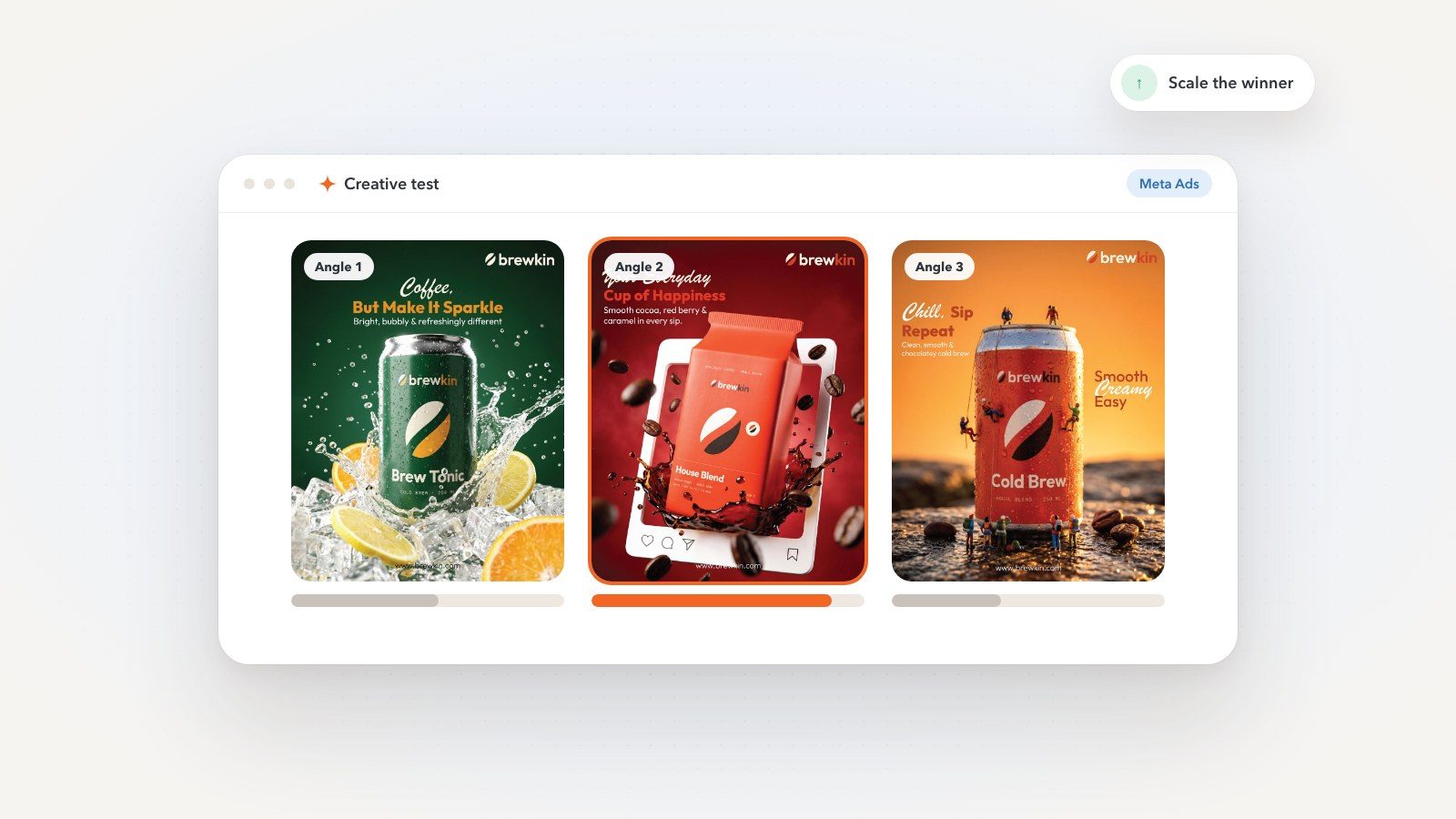
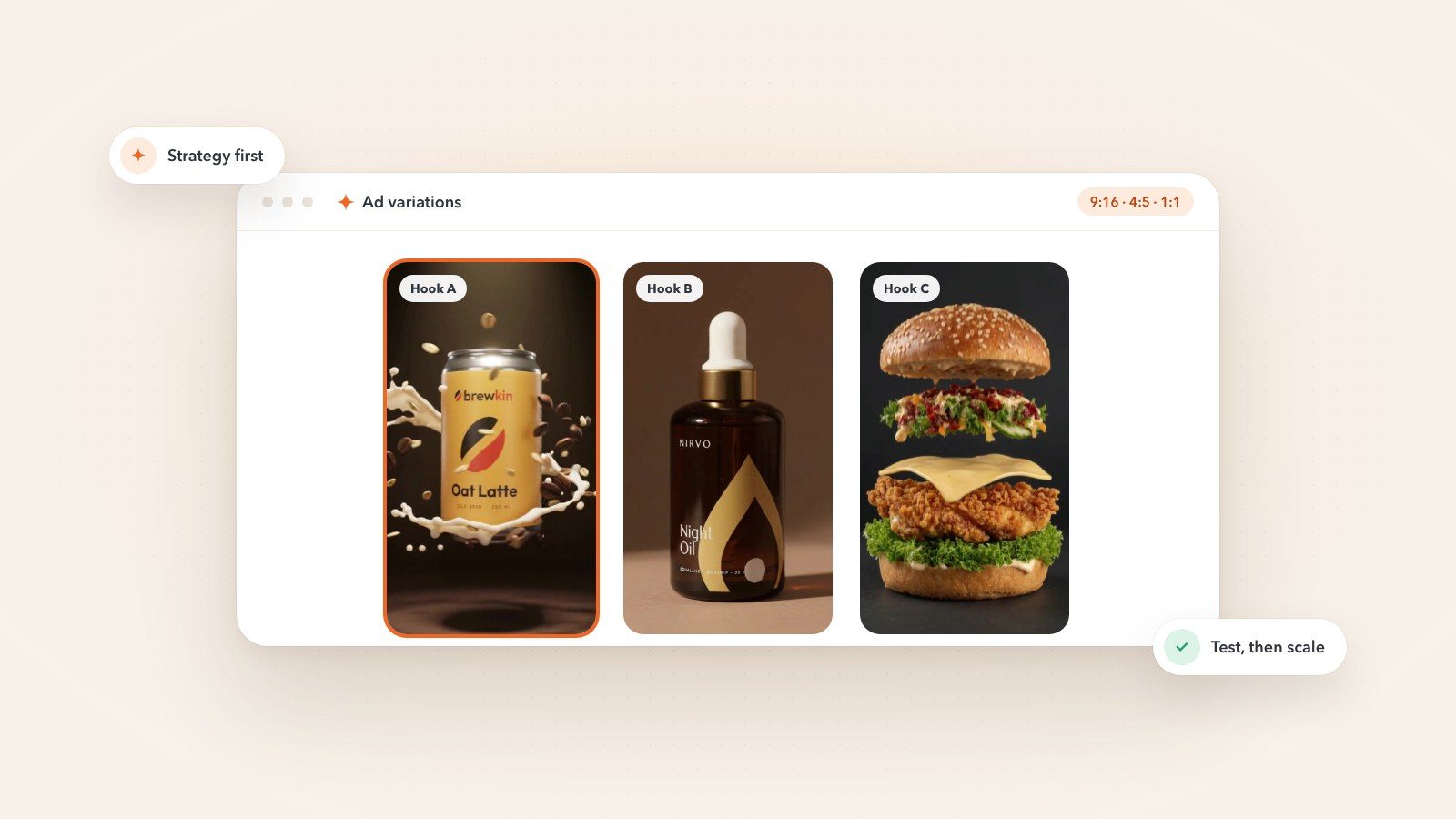
One video is rarely enough to understand what works. Brands that run paid ads should create multiple variations to test different hooks, offers, and messages.
Recommended Starting Point
For a new campaign, a brand should start with:
- 3–5 creative angles
- 2–3 hook variations per angle
- 1–2 CTA variations
- 2–3 platform formats
This means a brand may need 10–20 ad variations before it can understand what works best.
Ongoing Creative Testing
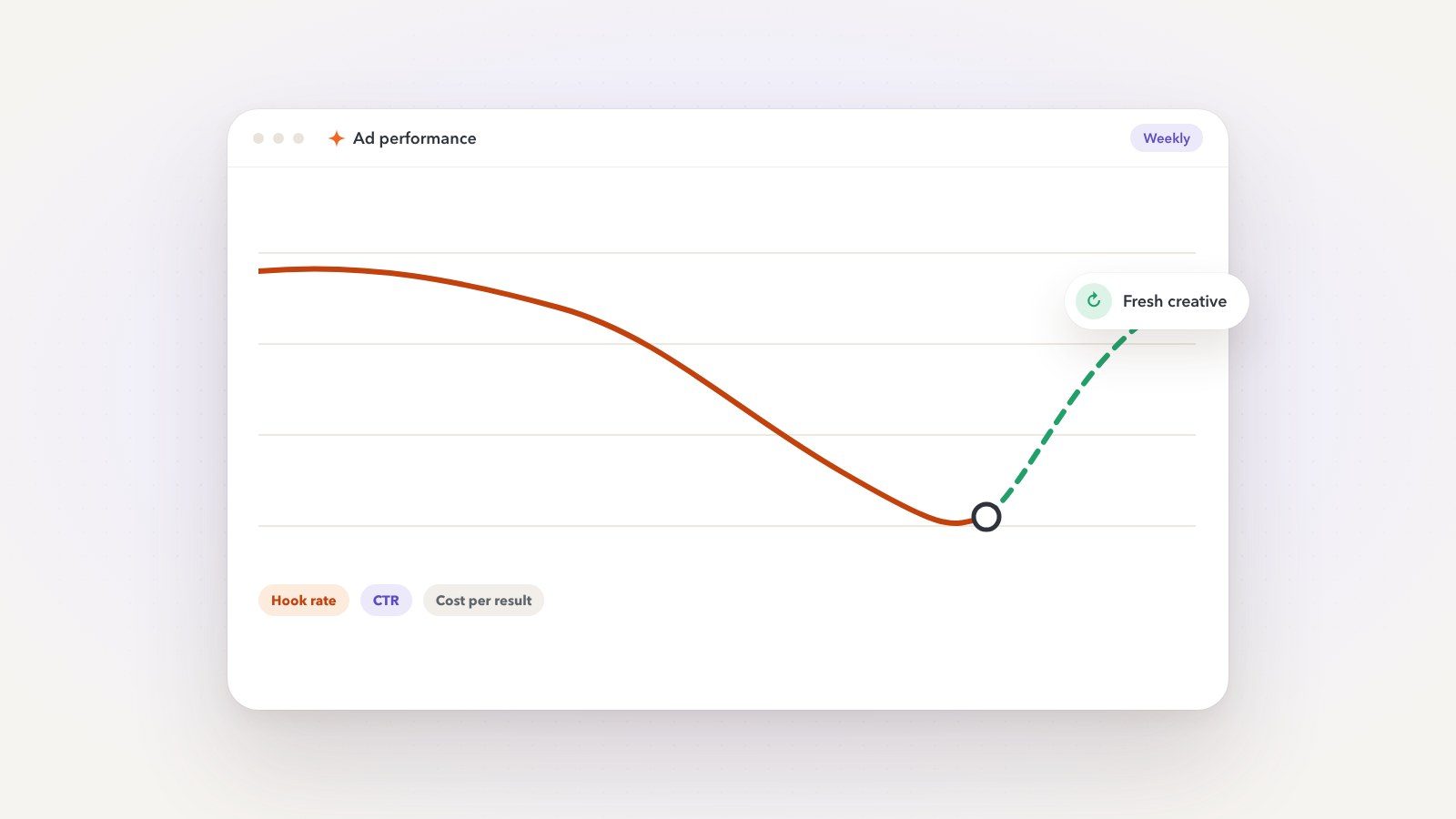
For brands running ads continuously, a good rule is to refresh creative regularly to avoid fatigue.
A simple monthly target could be:
- 10–20 new ad variations for small brands
- 20–40 new ad variations for growing brands
- 40–80 new ad variations for high-spend brands
The exact number depends on ad spend, audience size, and campaign goals.
What Is a Good Budget for Video Ads?
A good budget depends on the business goal, product price, and expected return.
Small Business Budget
For a small business, a good starting budget may be:
- $500–$1,500 per month for creative production
- $500–$2,000 per month for ad spend
- 2–4 weeks of testing before scaling
This allows the brand to test a few creative angles and learn what works.
Growing Brand Budget
For a growing brand, a good budget may be:
- $1,500–$3,000 per month for creative production
- $3,000–$10,000 per month for ad spend
- Ongoing creative testing and optimization
This allows the brand to test more variations and scale winning creative.
High-Spend Brand Budget
For a high-spend brand, a good budget may be:
- $3,500–$6,000+ per month for creative production
- $10,000+ per month for ad spend
- Weekly creative testing and reporting
This allows the brand to maintain a steady stream of fresh, high-performing creative.
How to Calculate Video Ad ROI
To understand whether a video ad is worth the cost, calculate the return on investment.
A simple formula is:
For example, if a brand spends $1,000 on creative and ad spend, and generates $3,000 in revenue, the ROI is:
This means the brand earned $2 for every $1 spent.
What Is a Good Cost Per Result?
A good cost per result depends on the industry, product price, and business model.
E-commerce
For e-commerce, a good cost per purchase depends on the product price and margin.
- Low-ticket products may need a lower cost per purchase
- High-ticket products can afford a higher cost per purchase
- The key metric is profit per order, not just cost per purchase
Lead Generation
For lead generation, a good cost per lead depends on the value of a customer.
- Low-ticket services may need a lower cost per lead
- High-ticket services can afford a higher cost per lead
- The key metric is customer lifetime value, not just cost per lead
SaaS
For SaaS, a good cost per trial or signup depends on the lifetime value of a customer.
- Low-ticket SaaS may need a lower cost per trial
- High-ticket SaaS can afford a higher cost per trial
- The key metric is customer lifetime value, not just cost per trial
Common Mistakes That Increase Cost
Making Only One Ad
One video cannot tell you what your audience responds to. Create multiple variations so you can learn which creative angle works best.
Ignoring Creative Testing
Without testing, brands often keep spending on ads that do not perform. A simple testing framework can reduce wasted ad spend.
Using Weak Hooks
A weak hook can reduce engagement and increase cost per result. The first 1–3 seconds should stop the scroll and make the viewer want to keep watching.
Ignoring Landing Page Quality
Even a good ad can fail if the landing page is confusing or slow. Make sure the landing page matches the ad message and has a clear call to action.
Not Tracking Results
Without tracking, brands cannot know which ads are working. Use proper tracking to measure leads, sales, and return on ad spend.
How to Reduce Video Ad Cost
Use AI for Variations
AI can help create multiple variations from one product shoot, one script structure, or one set of visual assets. This can reduce the cost per variation.
Repurpose Winning Creative
If an ad performs well, repurpose it into different formats, lengths, and platform versions. This can extend the life of a winning creative.
Test Hooks Before Full Production
Test different hooks with simple versions before investing in a full production. This can reduce wasted spend.
Use a Monthly Retainer
A monthly retainer can reduce cost per asset because the agency can plan, produce, and test creative in batches.
Focus on Conversion, Not Views
Do not judge an ad only by views. Focus on leads, sales, and return on ad spend.
How Asian Pixel Prices Video Ads
Asian Pixel uses a performance creative approach. The goal is not simply to create videos, but to create ads that support testing, learning, and business growth.
A strong video ad system includes:
- Creative strategy
- Audience and offer analysis
- Ad concept development
- Scriptwriting and hooks
- AI-assisted production
- Motion graphics and editing
- Brand-consistency checks
- Creative variations
- Performance reporting
This approach helps brands move beyond one-off videos and build a repeatable creative system.
Final Thoughts
The cost of a video ad in 2026 depends on the production style, creative complexity, talent, location, editing, revisions, and whether the ad is made with AI, traditional production, or a mix of both.
The best approach is to focus on results, not just cost. A higher-quality ad that generates consistent leads or sales can be more valuable than a cheaper ad that does not convert.
If you want to get better results from video ads, focus on the fundamentals: a clear offer, a specific audience, a strong hook, a believable message, and continuous testing.
Frequently asked questions
What Affects Video Ad Cost?
Video ad pricing is not based only on video length. A 30-second ad can be cheap or expensive depending on what is required to make it perform.
How Many Videos Should a Brand Create?
One video is rarely enough to understand what works. Brands that run paid ads should create multiple variations to test different hooks, offers, and messages.
What Is a Good Budget for Video Ads?
A good budget depends on the business goal, product price, and expected return.
What Is a Good Cost Per Result?
A good cost per result depends on the industry, product price, and business model.