Key takeaways
- AI video ads mix AI tools with strategy, editing, motion and copywriting; the AI tool alone does not make a winning ad.
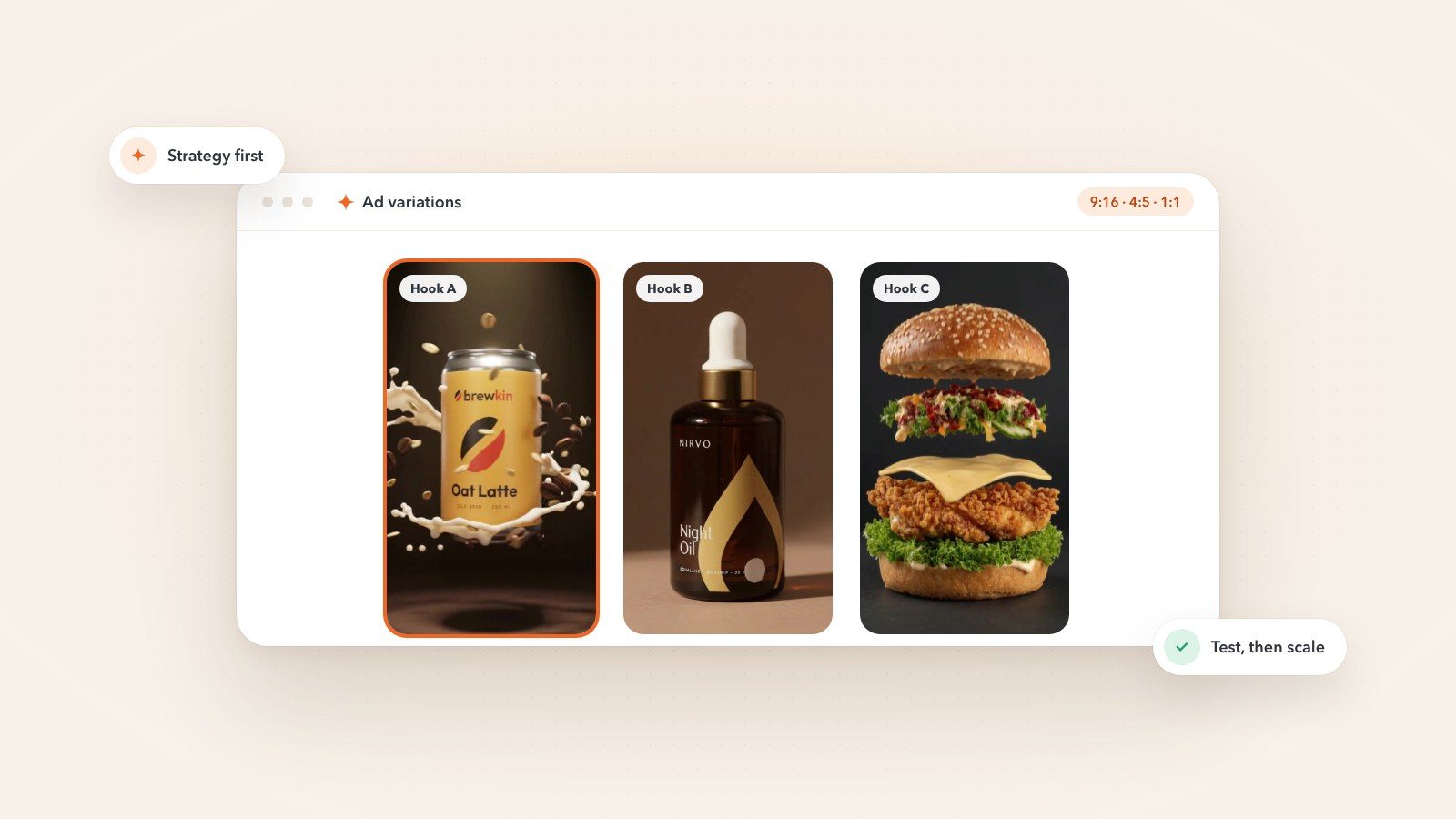
- Their biggest value is speed and cheaper testing: many hooks, offers and styles instead of one hero video.
- Creative direction still decides the offer, the message, the hook and brand safety.
- Treat it as a system: know the audience, build angles, produce variations, measure and improve.
AI video ads are short, conversion-focused videos created with a mix of AI tools, creative strategy, editing, motion design, copywriting, and advertising thinking. Instead of producing one expensive “hero video,” brands can now create multiple ad variations, test different hooks, and identify the messages that generate the strongest results.
For many brands, AI video ads are no longer just a cheaper production option. They are a faster way to learn what customers respond to, scale creative testing, and keep campaigns fresh across Meta, TikTok, YouTube, and other paid channels.
What Are AI Video Ads?
AI video ads are advertisements that use artificial intelligence during one or more stages of production. AI may help generate visuals, voiceovers, scripts, captions, background scenes, product presentations, or multiple versions of the same ad.
However, a strong AI video ad is not simply a video made by an AI tool. It still requires creative direction: a clear offer, a persuasive message, a strong hook, brand consistency, and an understanding of what will make a viewer take action.
What AI Can Do
AI can help brands:
- Generate product visuals and scene variations
- Create voiceovers in different languages or tones
- Write ad scripts and captions
- Produce multiple hook variations
- Turn static product images into motion visuals
- Localize ads for different markets
- Create UGC-style video concepts
- Speed up editing and repurposing
What AI Cannot Replace
AI cannot fully replace:
- Brand strategy
- Market positioning
- Customer insight
- Creative judgment
- Cultural understanding
- Compliance and brand-safety review
- Conversion-focused storytelling
The best results come from combining AI speed with creative strategic thinking.
Why Brands Use AI Video Ads
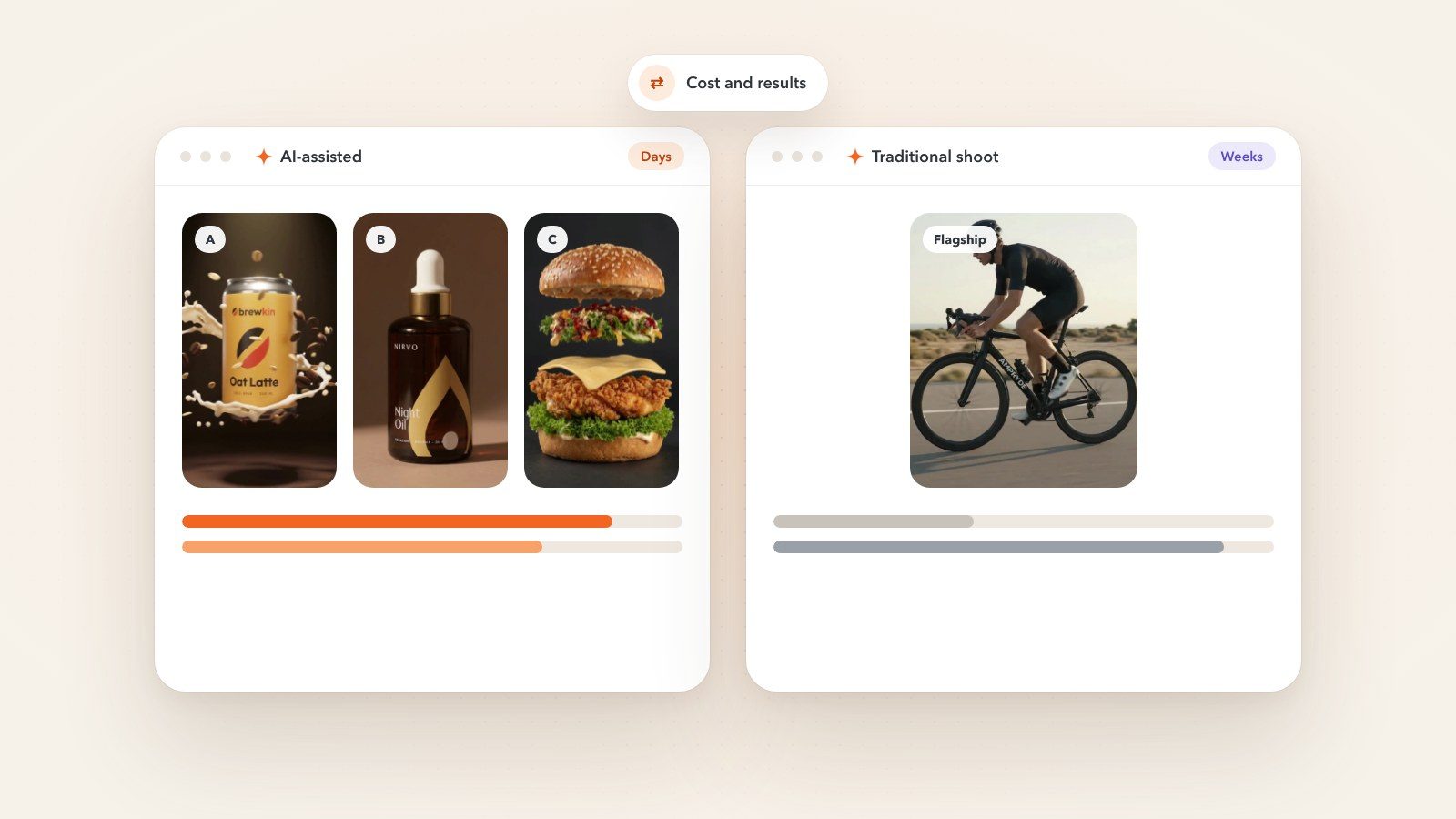
The main reason brands use AI video ads is speed. Traditional video production can take weeks, while AI-assisted production can create multiple ad concepts and variations in days.
But speed is only part of the value. AI video ads also make creative testing more affordable. Instead of betting everything on one video, a brand can test several hooks, offers, visual styles, and calls to action.
Key Benefits
- Faster production: Create multiple ad concepts without long production timelines.
- Lower testing cost: Test more creative variations without producing every version manually.
- More creative variations: Produce different hooks, formats, and messages for different audiences.
- Better creative learning: Identify which messages drive clicks, leads, and purchases.
- Platform-ready content: Create vertical, square, and widescreen versions for different channels.
- Consistent brand output: Use templates, prompts, and brand guidelines to maintain visual consistency.
The best results come from combining AI speed with creative strategic thinking.
AI Video Ads vs Traditional Video Ads
Traditional video ads are usually built around a single polished concept. They can be excellent for brand films, high-end product launches, and large-scale campaigns, but they often take longer and cost more to produce.
AI video ads work differently. They prioritize speed, variation, and testing. A brand can create several versions of an ad, run them in a campaign, and quickly learn which creative performs best.
AI video ads do not automatically replace traditional production. The smartest brands use both: traditional production for premium brand assets and AI-assisted production for performance testing and scaling.
Types of AI Video Ads
1. UGC-Style AI Ads
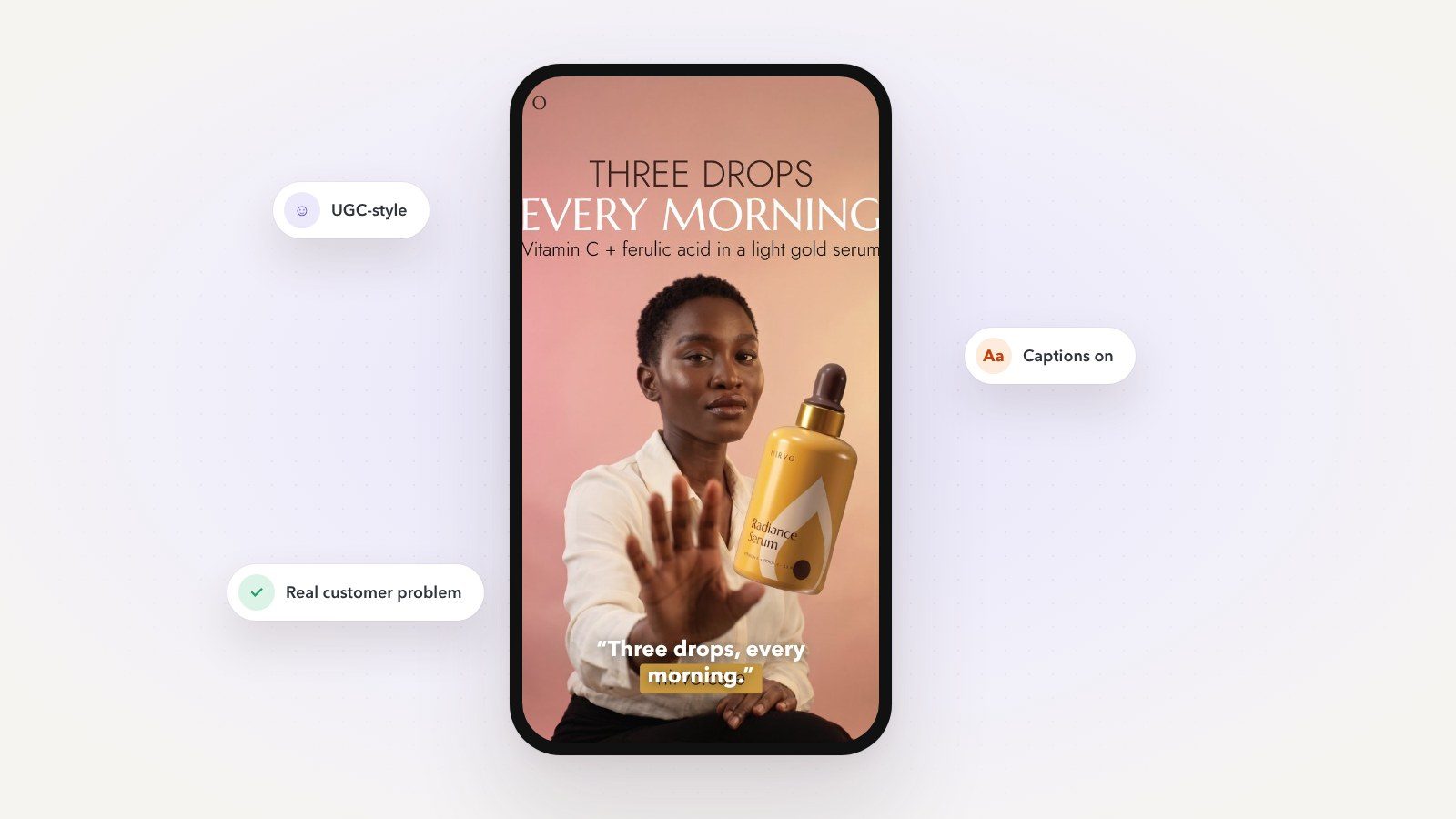
UGC-style ads look like authentic customer videos. They often include a person speaking directly to the camera, a product demonstration, or a relatable customer story.
AI can help create scripts, voiceovers, avatars, backgrounds, and variations. These ads work especially well for social platforms because they feel less like traditional advertising.
2. Product Demo Ads
Product demo ads show how a product works. They are useful for e-commerce brands, SaaS products, apps, gadgets, and physical products with visible benefits.
A strong product demo ad should show the problem, introduce the product, demonstrate the benefit, and end with a clear call to action.
3. AI Avatar Ads
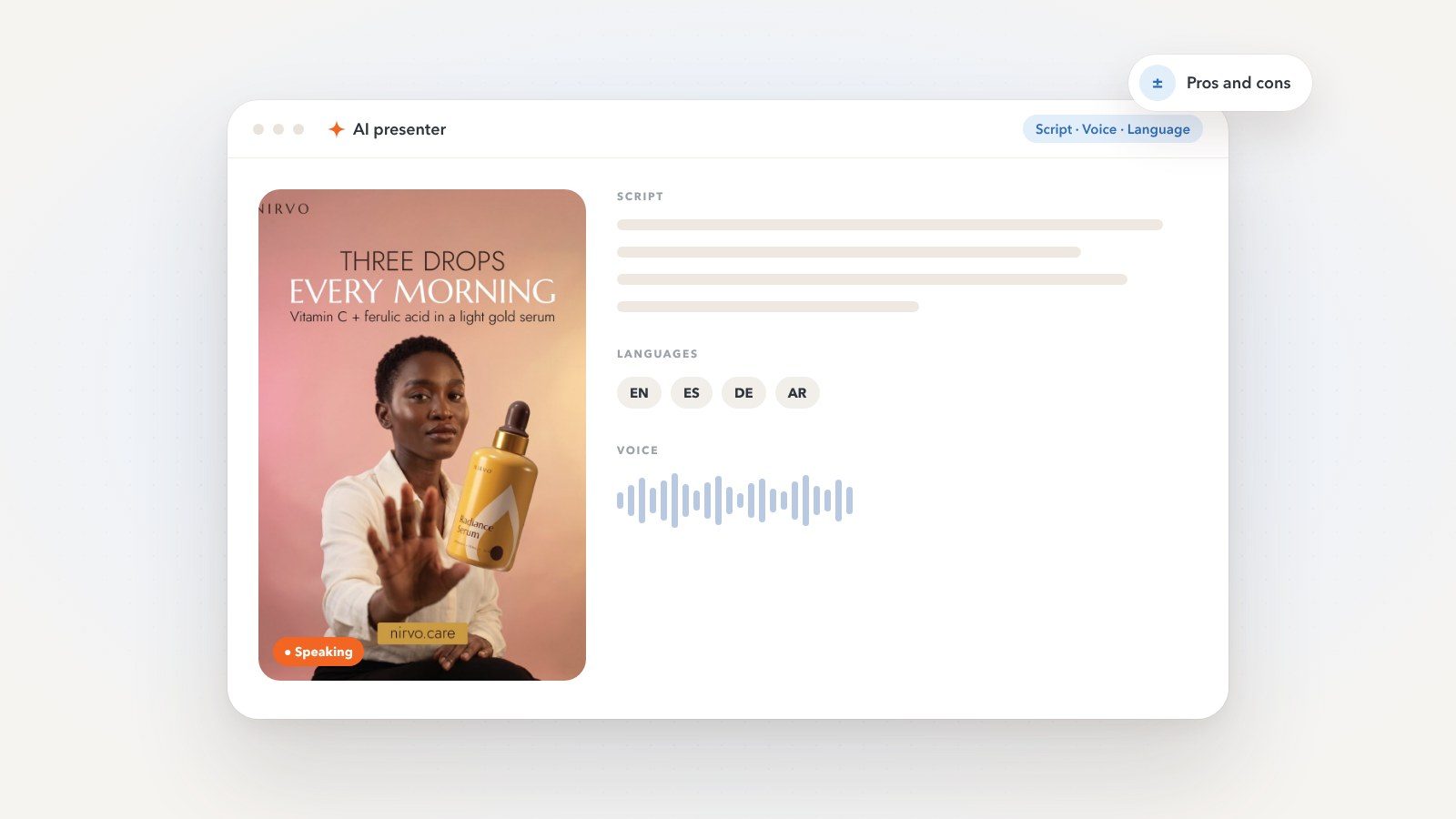
AI avatar ads use digital presenters to deliver a message. They can be useful for explaining an offer, introducing a service, or creating multiple language versions of the same ad.
They work best when the avatar feels natural, the script is conversational, and the ad focuses on a clear customer benefit.
4. Motion Graphics Ads
Motion graphics ads use animation, text, icons, and visual transitions to explain an idea quickly. They are ideal for apps, SaaS products, financial services, and brands that need to simplify a complex offer.
5. CGI Product Ads
CGI product ads use 3D visuals and digital environments to present a product in a premium or imaginative way. They are especially useful for products that are difficult to film, expensive to shoot, or need a strong visual impact.
6. Founder-Led Ads
Founder-led ads feature the business owner or team member speaking directly to the audience. They can build trust, explain the brand story, and make the company feel more personal.
AI can help improve the script, add captions, create variations, and repurpose the footage into multiple shorter ads.
How to Create AI Video Ads
Step 1: Start With the Offer
Before creating any video, define the offer clearly. Ask:
- What are we selling?
- Who is it for?
- What problem does it solve?
- Why should someone choose it now?
- What action should the viewer take?
A clear offer matters more than advanced AI tools. Without a strong offer, even the best-looking video may fail to convert.
Step 2: Understand the Audience
Identify the customer’s main pain point, desire, objection, and motivation. A good ad speaks to a specific person, not a generic audience.
For example, a skincare brand may target people concerned about acne scars, while a SaaS company may target founders who want to reduce manual work. The message should change based on the audience.
Step 3: Create a Creative Angle
A creative angle is the main idea behind the ad. It is not just the product; it is the way you position the product in the customer’s mind.
Examples include:
- Problem-solution angle
- Before-and-after angle
- Social proof angle
- Founder story angle
- Comparison angle
- Offer-focused angle
- Objection-handling angle
Each angle can become multiple video variations.
Step 4: Write a Strong Hook
The hook is the first 1–3 seconds of the ad. Its job is to stop the scroll and make the viewer want to keep watching.
Strong hooks often use one of these approaches:
- Ask a direct question
- State a bold claim
- Highlight a common problem
- Show a surprising visual
- Start with a result
- Address a specific audience
- Challenge a common belief
For example: “Still struggling to get leads from your ads?” is more specific than “Check out our new service.”
Step 5: Build the Ad Structure
A simple high-performing structure is:
- Hook
- Problem
- Solution
- Proof
- Offer
- Call to action
This structure works because it moves the viewer from attention to interest, then to action.
Step 6: Use AI for Production
Once the strategy and script are ready, AI can help produce:
- Product visuals
- Background scenes
- Voiceovers
- Captions
- Multiple hook versions
- Different aspect ratios
- Language variations
- Editing variations
But every output should be reviewed by a creative before publishing. AI can generate options, but it should not decide the final brand message without oversight.
Step 7: Test and Improve
After launching, track performance and identify what is working. Then create more variations based on the winning creative.
For example, if a “problem-focused” hook performs better than a “product-focused” hook, create more ads around that problem. If a specific CTA generates more clicks, test similar CTAs in future ads.
Best Practices for AI Video Ads
Keep the Hook Short
The first few seconds determine whether someone continues watching. Avoid long intros, logos, or slow build-ups. Start with the most interesting idea immediately.
Make One Clear Point
Each ad should communicate one main idea. Trying to explain too many benefits in one video can confuse viewers and reduce conversions.
Design for Sound-Off Viewing
Many people watch social videos without sound. Use clear captions, on-screen text, and visual storytelling so the message still works.
Use Native Platform Formats
Create vertical videos for TikTok, Reels, and YouTube Shorts. Avoid simply cropping a horizontal video, because it may look awkward and reduce engagement.
Show the Product Early
Do not save the product for the end. Show it early so viewers immediately understand what the ad is about.
End With One CTA
Use one clear call to action, such as “Shop now,” “Book a call,” “Get a quote,” or “Start free trial.” Multiple CTAs can dilute the message.
Common Mistakes to Avoid
Using AI Without Strategy
AI can create content quickly, but it cannot decide what a brand should say. Without strategy, brands often produce generic videos that look similar to competitors.
Making Only One Ad
One video cannot tell you what your audience responds to. Create multiple variations so you can learn which creative angle works best.
Ignoring Brand Consistency
AI-generated visuals can look impressive but inconsistent. Use brand guidelines, approved colors, fonts, tone of voice, and visual references to keep content recognizable.
Overusing AI Avatars
AI avatars can be useful, but they should not replace authentic presence of real people in every campaign. Use them strategically, especially for educational or explanatory content.
Not Reviewing Output
AI can produce inaccurate claims, awkward visuals, or off-brand messaging. Always review scripts, visuals, captions, and claims before publishing.
How to Measure AI Video Ad Performance
Do not judge an ad only by views. A video may get views but fail to generate leads or sales.
Track these metrics:
- Hook rate: How many people watch the first few seconds
- Hold rate: How long people continue watching
- Click-through rate: How many people click the ad
- Conversion rate: How many people complete the desired action
- Cost per lead: How much it costs to get one lead
- Cost per purchase: How much it costs to get one sale
- ROAS: Return on ad spend
These metrics help you understand not only whether an ad looks good, but whether it supports business growth.
When AI Video Ads Work Best
AI video ads work best when a brand needs:
- More creative variations
- Faster campaign testing
- Lower production costs
- Platform-specific ads
- UGC-style content at scale
- Product-focused paid social campaigns
- Ongoing creative refreshes
They are especially useful for e-commerce, SaaS, apps, local services, education, healthcare marketing, and consumer brands that need to test messaging quickly.
When to Use Traditional Production
Traditional production may still be better when a brand needs:
- A premium brand film
- A high-end product launch
- Complex live-action storytelling
- Celebrity or influencer content
- Large-scale cinematic visuals
- Highly controlled brand messaging
AI video ads and traditional production are not competitors. They are different tools for different goals.
How Asian Pixel Approaches AI Video Ads
Asian Pixel combines AI tools, creative strategy, editing, motion design, copywriting, and advertising thinking to create high-performing video ads. The goal is not simply to generate content quickly, but to create ads that support brand growth and campaign performance.
A strong AI video ad system includes:
- Creative strategy
- Audience and offer analysis
- Ad concept development
- Scriptwriting and hooks
- AI-assisted production
- Motion graphics and editing
- Brand-consistency checks
- Creative variations
- Performance reporting
This approach helps brands move beyond one-off videos and build a repeatable creative system.
Final Thoughts
AI video ads give brands a faster and more scalable way to create, test, and improve advertising creative. But the technology alone does not guarantee results. The winning formula is AI-powered production combined with strong creative strategy, clear messaging, and continuous testing.
If you want to create video ads that do more than look good, focus on building a system: understand your audience, develop strong creative angles, produce multiple variations, measure performance, and improve based on real data.