Key takeaways
- Creative fatigue is normal in paid advertising: performance drops as the same audience sees the same ad.
- Spot the early signs, then work out what is causing the drop before changing anything.
- Refresh in a structured way: a new hook, a new creative angle or a new visual style.
- Prevent it with multiple variations, regular refreshes and a creative testing framework.
Ad creative fatigue happens when an ad stops performing as well as it used to because the audience has seen it too many times. The creative may still look good, but it no longer grabs attention or drives the same level of clicks, leads, or sales.
Creative fatigue is normal in paid advertising. The solution is not to panic or change everything at once. The solution is to spot the early signs, understand what is causing the drop, and refresh the creative in a structured way.
What Is Ad Creative Fatigue?
Ad creative fatigue occurs when the same audience sees the same ad too often. Over time, the ad loses its ability to stop the scroll, generate interest, and drive action.
This can happen even if the ad was performing well when it first launched. The audience becomes familiar with the message, visuals, and offer, so engagement and conversion rates start to decline.
What Causes Creative Fatigue?
Creative fatigue can be caused by:
- Showing the same ad too often
- Using the same hook for too long
- Targeting a small audience
- Running the same creative for too many days
- Using similar visuals across multiple ads
- Repeating the same offer
- Not refreshing creative regularly
The more often people see the same ad, the more likely they are to ignore it.
How to Spot Creative Fatigue
Creative fatigue usually shows up in the data before it becomes obvious in results.
1. Declining Hook Rate
If fewer people are watching the first few seconds, the hook may be losing its impact.
Track:
- 3-second view rate
- Thumb-stop ratio
- Hook rate
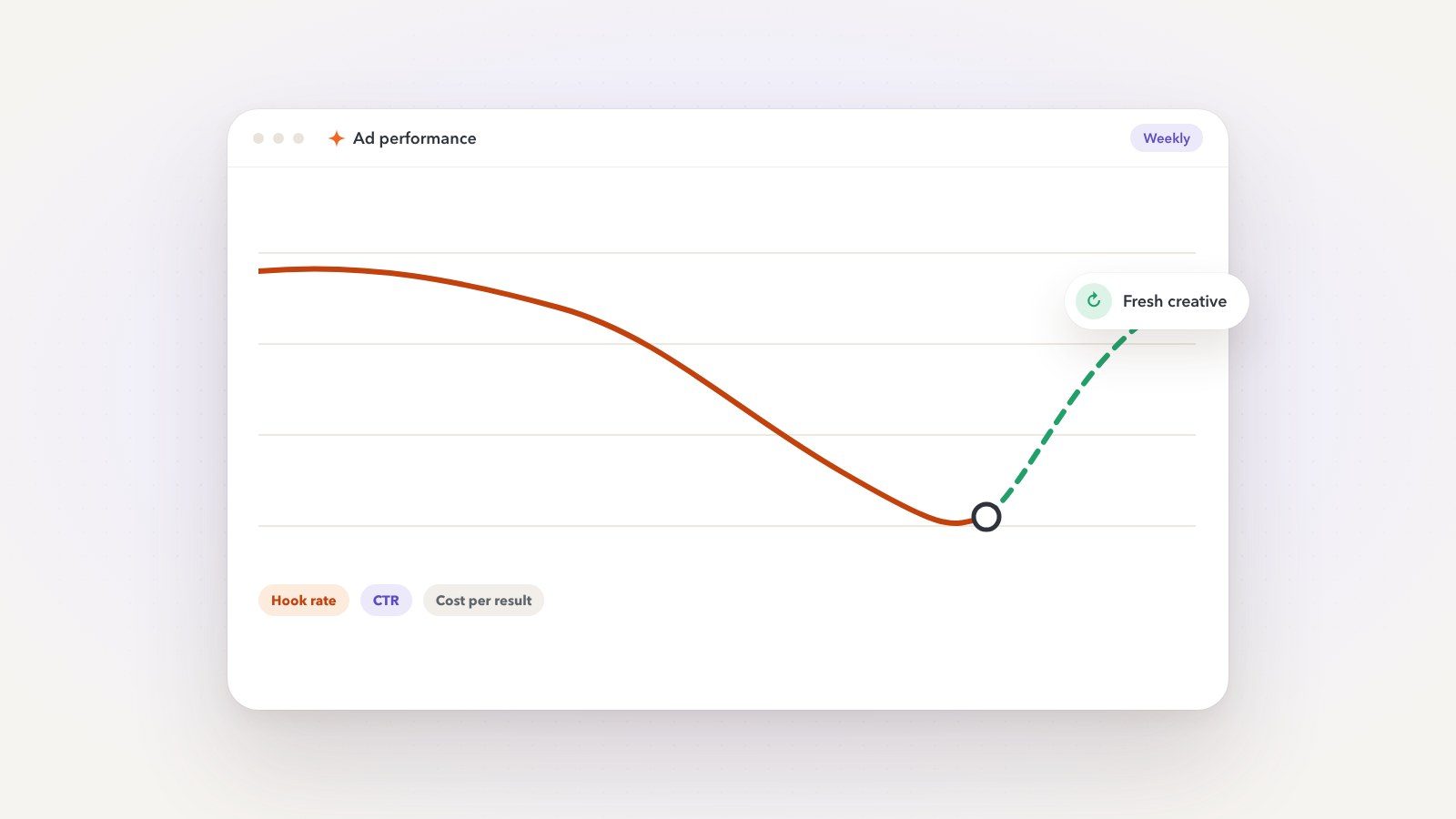
A declining hook rate is often one of the first signs of fatigue.
2. Declining Click-Through Rate
If fewer people are clicking the ad, the creative may no longer be compelling.
Track:
- Click-through rate
- Link clicks
- Outbound clicks
A declining CTR can signal that the ad is no longer stopping the scroll.
3. Rising Cost Per Result
If the cost per lead, purchase, or signup is increasing, the creative may be losing efficiency.
Track:
- Cost per lead
- Cost per purchase
- Cost per signup
- Cost per booking
A rising cost per result often means the ad is no longer performing as well as it used to.
4. Declining Conversion Rate
If fewer people are completing the desired action, the creative may no longer be persuasive.
Track:
- Conversion rate
- Lead form completion rate
- Purchase rate
- Signup rate
A declining conversion rate can signal that the message is no longer connecting with the audience.
5. Declining ROAS
If return on ad spend is declining, the creative may no longer be generating enough revenue to justify the spend.
Track:
- ROAS
- Revenue
- Profit
- Cost per purchase
A declining ROAS is often a late-stage sign of fatigue.
The solution is not to panic or change everything at once.
How to Fix Creative Fatigue
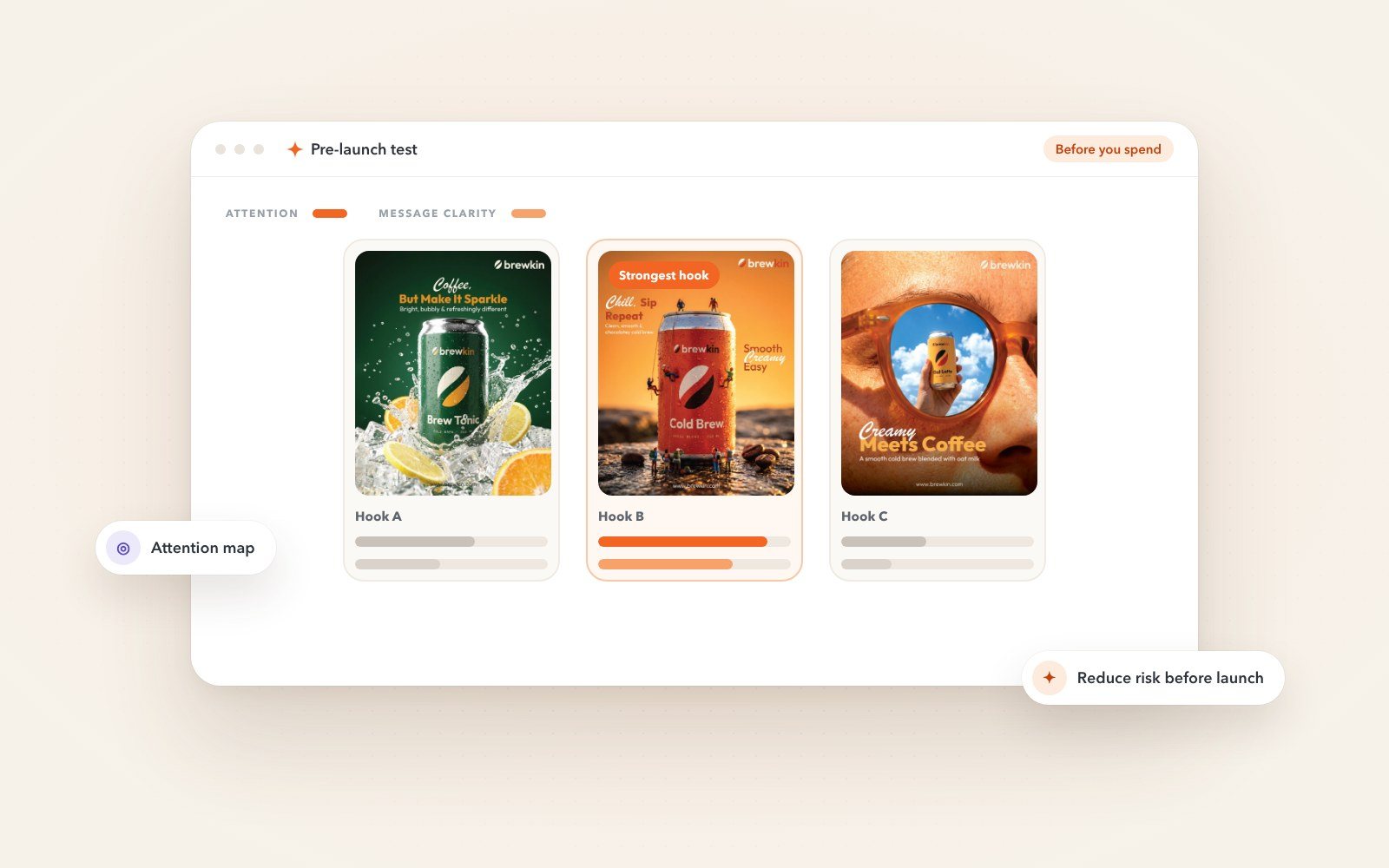
1. Refresh the Hook
The hook is the first 1–3 seconds of the ad. If the hook is losing impact, create new variations.
Try:
- A new problem-focused hook
- A new result-focused hook
- A new curiosity hook
- A new question hook
- A new bold claim hook
A strong hook can often revive a tired ad.
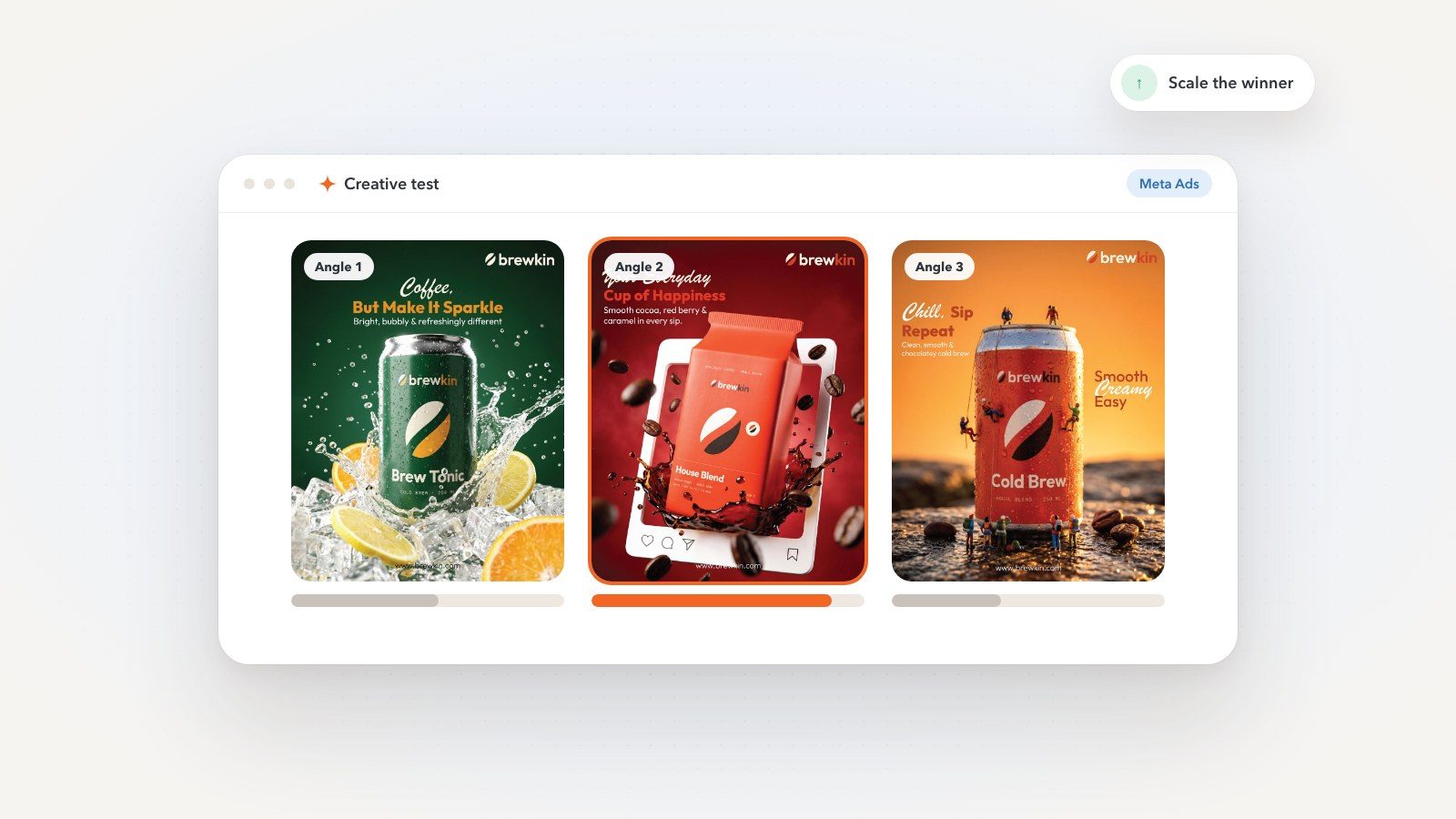
2. Change the Creative Angle
If the same angle is no longer working, try a new angle.
Examples include:
- Problem-solution
- Before-and-after
- Social proof
- Founder story
- Comparison
- Offer-focused
- Objection-handling
- Educational
- Lifestyle
- Urgency
A new angle can create a fresh reason to pay attention.
3. Change the Visual Style
If the visuals are no longer stopping the scroll, try a new visual style.
Examples include:
- UGC-style video
- Product demo
- Motion graphics
- CGI visuals
- Founder-led video
- Customer testimonial
- Before-and-after
- Lifestyle visuals
A new visual style can make the ad feel fresh.
4. Change the Offer
If the offer is no longer compelling, try a new offer.
Examples include:
- Discount
- Free trial
- Free consultation
- Bundle
- Limited-time offer
- Bonus
- Guarantee
A new offer can create a new reason to act.
5. Change the CTA
If the CTA is no longer driving action, try a new CTA.
Examples include:
- Shop now
- Learn more
- Book a call
- Get a quote
- Start free trial
- Download the app
A new CTA can create a new reason to act.
6. Change the Audience
If the same audience is seeing the ad too often, try a new audience.
Examples include:
- New interest-based audience
- New lookalike audience
- New geographic audience
- New demographic audience
- New retargeting audience
A new audience can create a fresh opportunity for the ad to perform.
7. Change the Placement
If the same placement is no longer working, try a new placement.
Examples include:
- Facebook Feed
- Instagram Feed
- Instagram Stories
- Reels
- Audience Network
- Messenger
A new placement can create a fresh opportunity for the ad to perform.
How to Prevent Creative Fatigue
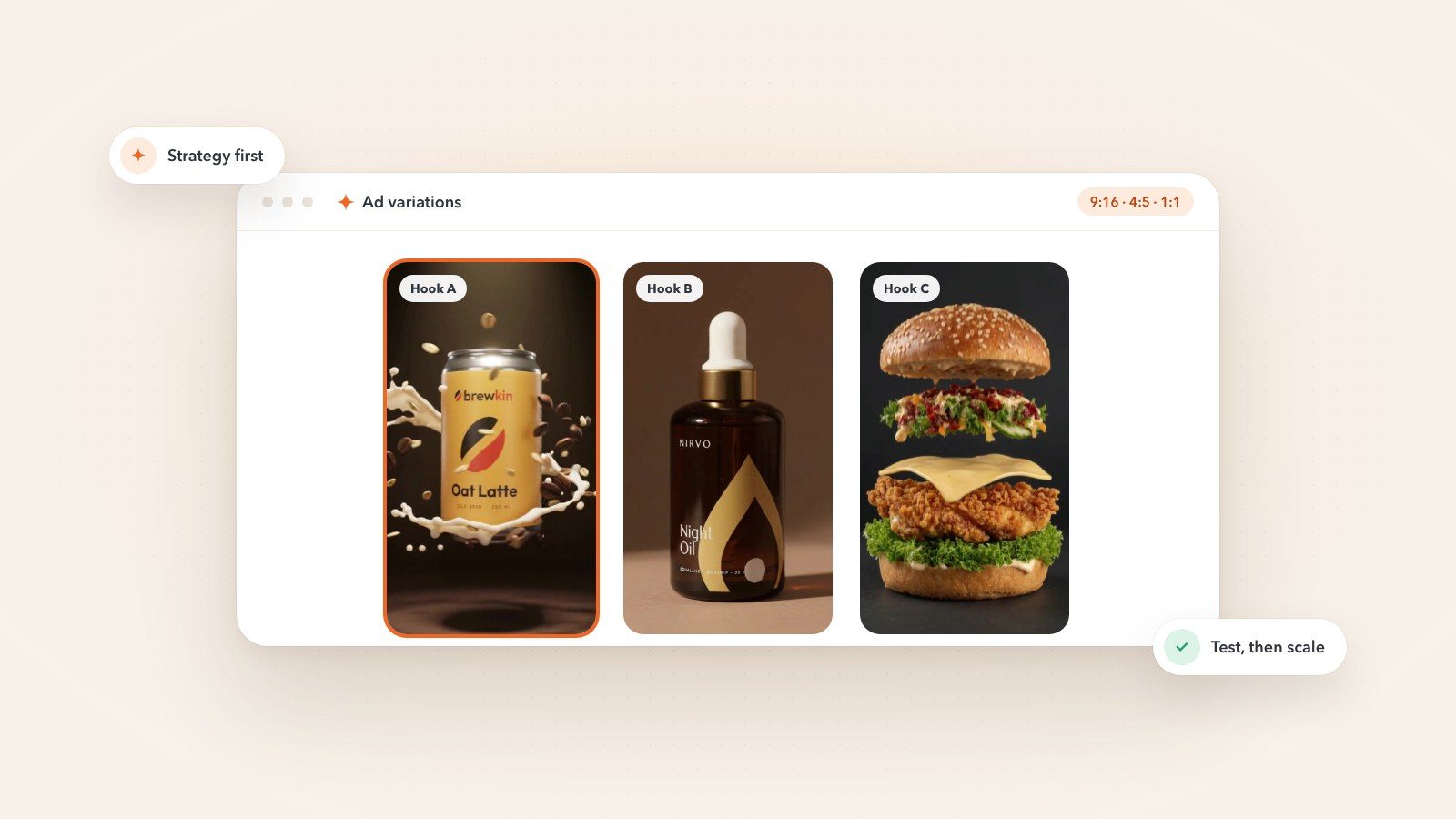
1. Create Multiple Variations
One ad cannot tell you what works. Create multiple variations so you can learn which creative angle works best.
2. Refresh Creative Regularly
Refresh creative regularly to keep the campaign strong.
A simple monthly target could be:
- 10–20 new ad variations for small brands
- 20–40 new ad variations for growing brands
- 40–80 new ad variations for high-spend brands
The exact number depends on ad spend, audience size, and campaign goals.
3. Use a Creative Testing Framework
A creative testing framework helps you decide what to test, how to test it, and how to measure results.
A good framework includes:
- A clear goal
- A defined audience
- A set of creative variations
- A testing schedule
- A set of KPIs
- A decision rule
- A process for scaling winners
Without a framework, testing can become random and inefficient.
4. Monitor Performance Weekly
Monitor performance weekly to spot early signs of fatigue.
Track:
- Hook rate
- Click-through rate
- Cost per result
- Conversion rate
- ROAS
Weekly monitoring can help you catch fatigue before it becomes a bigger problem.
5. Use AI to Speed Up Production
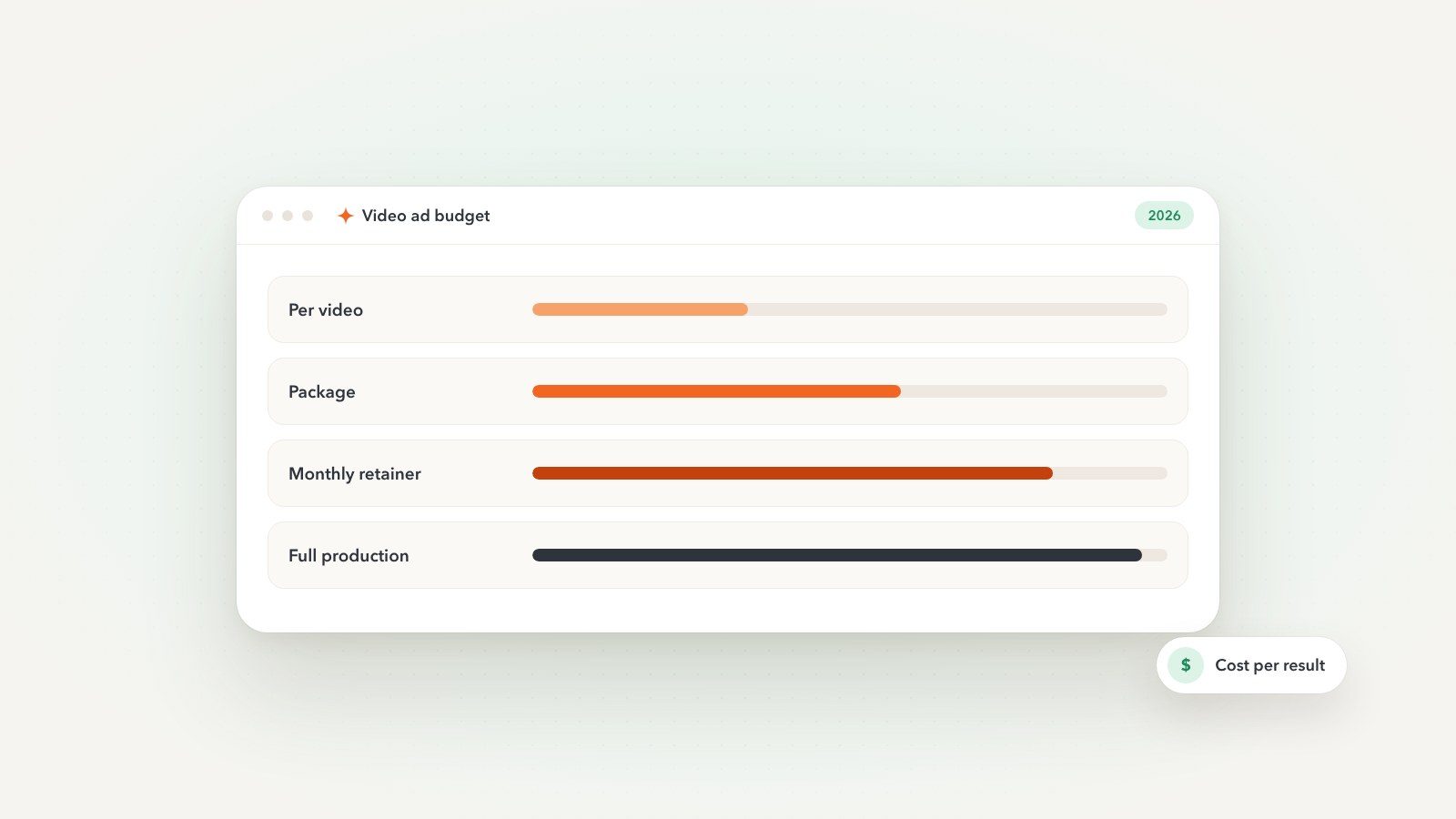
AI can help create multiple variations from one product shoot, one script structure, or one set of visual assets. This can reduce the cost per variation and make it easier to refresh creative.
Common Mistakes to Avoid
Changing Everything at Once
If you change too many things at once, you will not know what caused the result. Change one variable at a time.
Ignoring Early Signs
Do not wait until performance drops significantly. Monitor performance weekly to catch fatigue early.
Using the Same Hook Too Long
If the same hook is no longer working, create new variations.
Not Creating Enough Variations
One ad cannot tell you what works. Create multiple variations so you can learn which creative angle works best.
Not Measuring the Right KPIs
Do not judge an ad only by views. Focus on leads, sales, and return on ad spend.
How Asian Pixel Approaches Creative Fatigue
Asian Pixel uses a performance creative approach. The goal is not simply to create videos, but to create ads that support testing, learning, and business growth.
A strong creative fatigue system includes:
- Audience and offer analysis
- Creative angle development
- Hook variations
- Scriptwriting
- AI-assisted production
- Captions and on-screen text
- Brand-consistency checks
- Creative testing
- Performance reporting
This approach helps brands create more variations, test faster, and identify the messages that drive results.
Final Thoughts
Ad creative fatigue is normal in paid advertising. The solution is not to panic or change everything at once. The solution is to spot the early signs, understand what is causing the drop, and refresh the creative in a structured way.
The best way to prevent fatigue is to create multiple variations, refresh creative regularly, and use a creative testing framework.
If you want to get better results from Meta ads, focus on the fundamentals: a clear offer, a specific audience, a strong hook, a believable message, and continuous testing.