Key takeaways
- AI avatar ads use a digital presenter to explain an offer, product or service on camera.
- They are especially useful for SaaS, apps, local services, education and B2B marketing.
- They are weaker where authenticity, emotion and real social proof drive the decision.
- A natural script, a specific audience and continuous testing matter more than the avatar itself.
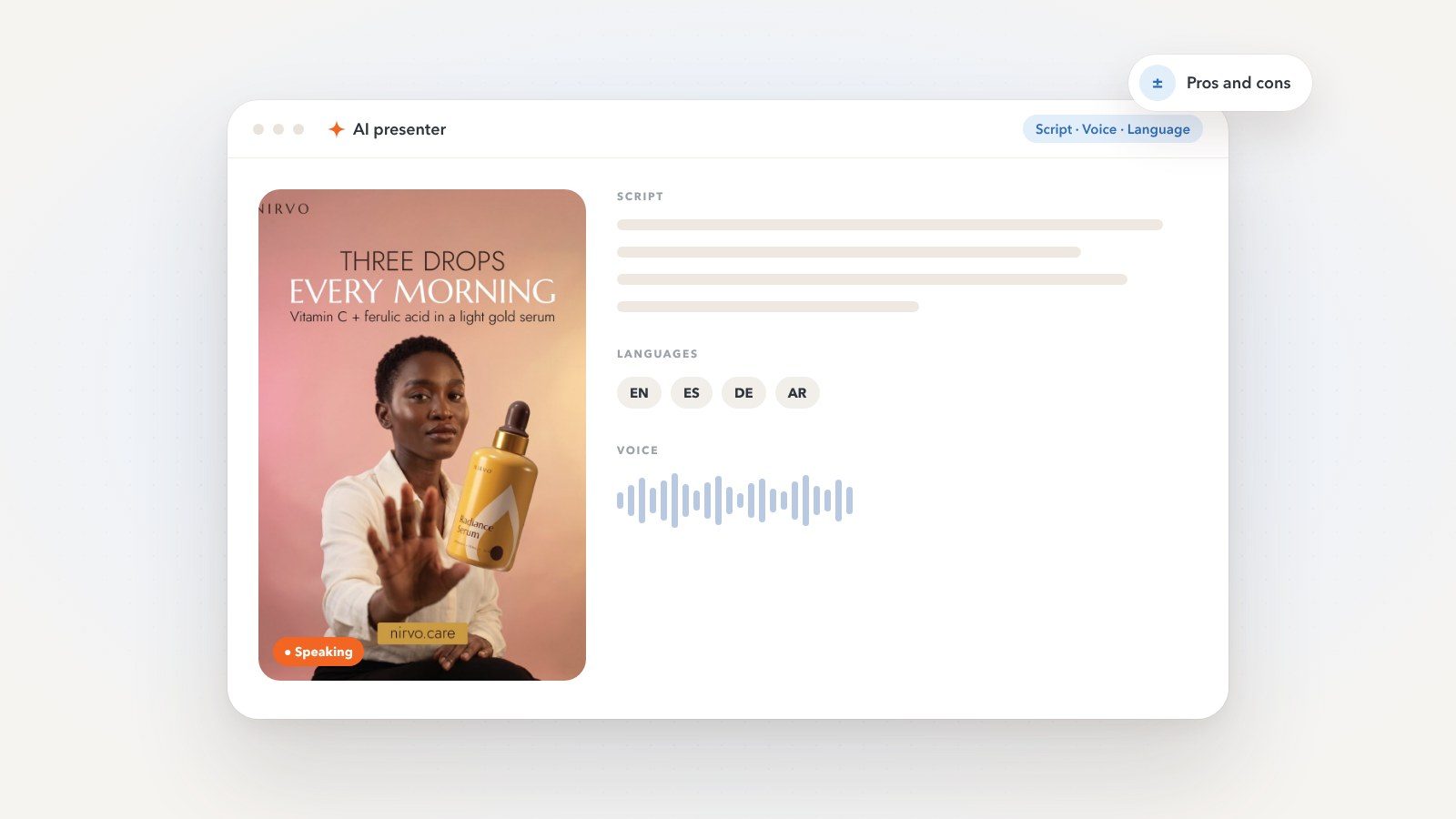
AI avatar video ads use digital presenters to deliver a marketing message. Instead of filming a real person, a brand can use an AI-generated presenter, voiceover, script, and visuals to create an ad quickly. These ads can be useful for explaining offers, introducing products, educating audiences, and producing multiple versions of the same message.
AI avatar ads are not right for every brand or every campaign. They work best when the message is clear, the presenter feels natural, and the ad focuses on a specific customer benefit. They can underperform when the avatar looks unnatural, the script sounds robotic, or the ad makes unrealistic claims.
What Are AI Avatar Video Ads?
An AI avatar video ad is a video advertisement featuring a digital presenter created or enhanced with artificial intelligence. The avatar may speak directly to the camera, explain a product, present an offer, or guide viewers through a message.
AI can support different parts of the production process, including:
- Avatar generation
- Voiceover creation
- Scriptwriting
- Lip-syncing
- Background scenes
- Captions
- Language localization
- Multiple ad variations
However, the avatar is only one part of the ad. A strong AI avatar ad still needs creative strategy, a clear offer, a strong hook, and a conversion-focused call to action.
How AI Avatar Ads Work
Most AI avatar ads follow a simple process:
- Define the campaign goal
- Identify the target audience
- Write a conversational script
- Choose an avatar style and voice
- Generate or select visuals
- Produce the video
- Add captions and on-screen text
- Review the ad for accuracy and brand consistency
- Create variations for testing
The most important step is the script. If the script sounds generic or overly promotional, the ad may fail even if the avatar looks realistic.
Use AI avatars for explanation and testing, and use real creators, customers, or founders for trust and social proof.
Pros of AI Avatar Video Ads
1. Faster Production
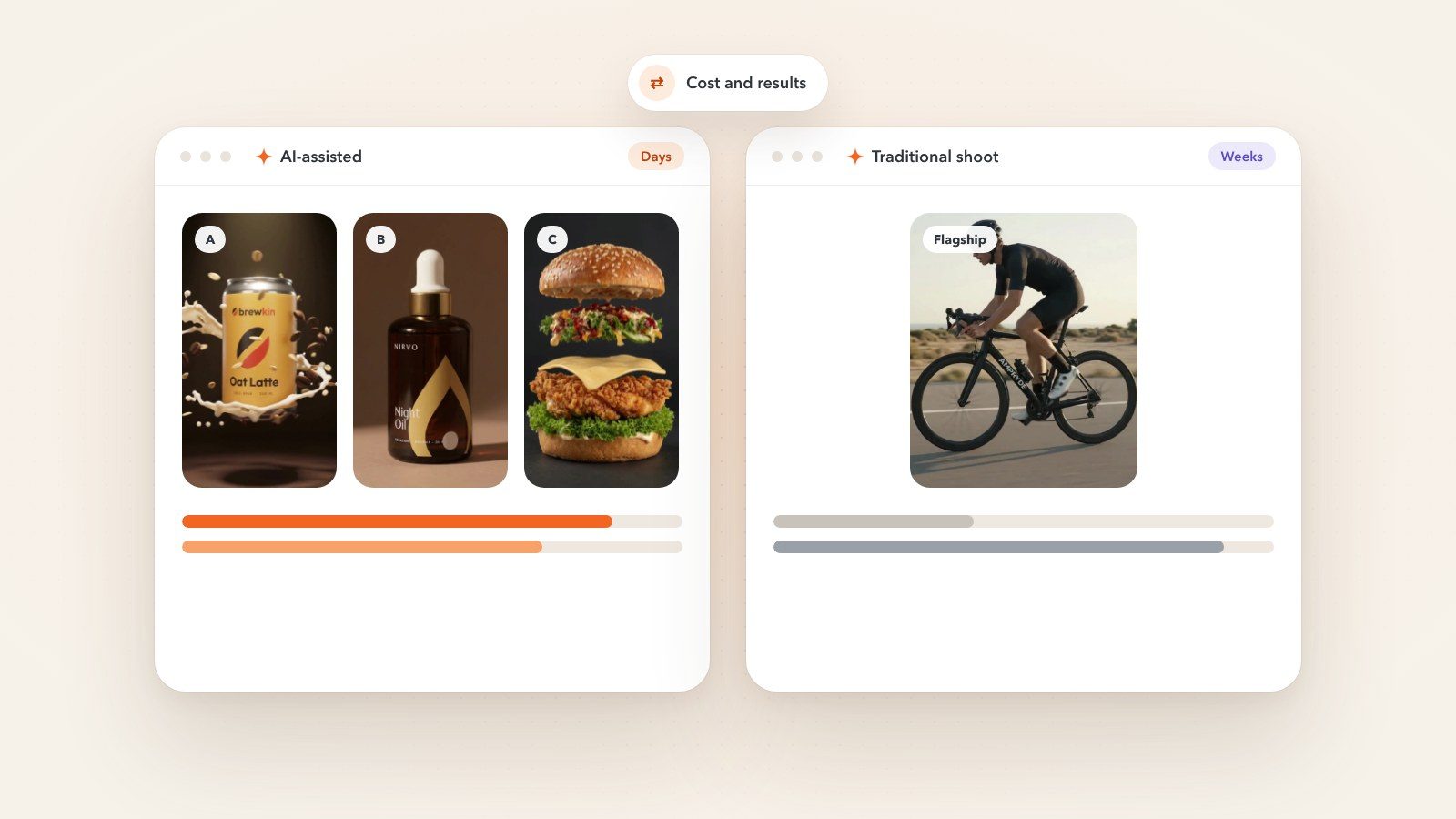
AI avatar ads can be produced much faster than traditional video shoots. A brand does not need to schedule a shoot, hire an actor, arrange a location, or wait for editing.
This makes them useful for brands that need to launch campaigns quickly or refresh ads frequently.
2. Lower Production Cost
AI avatar ads can reduce costs related to filming, actors, studios, travel, and repeated shoots. Instead of producing one expensive video, a brand can create multiple versions using the same avatar and script structure.
3. Easy Creative Testing
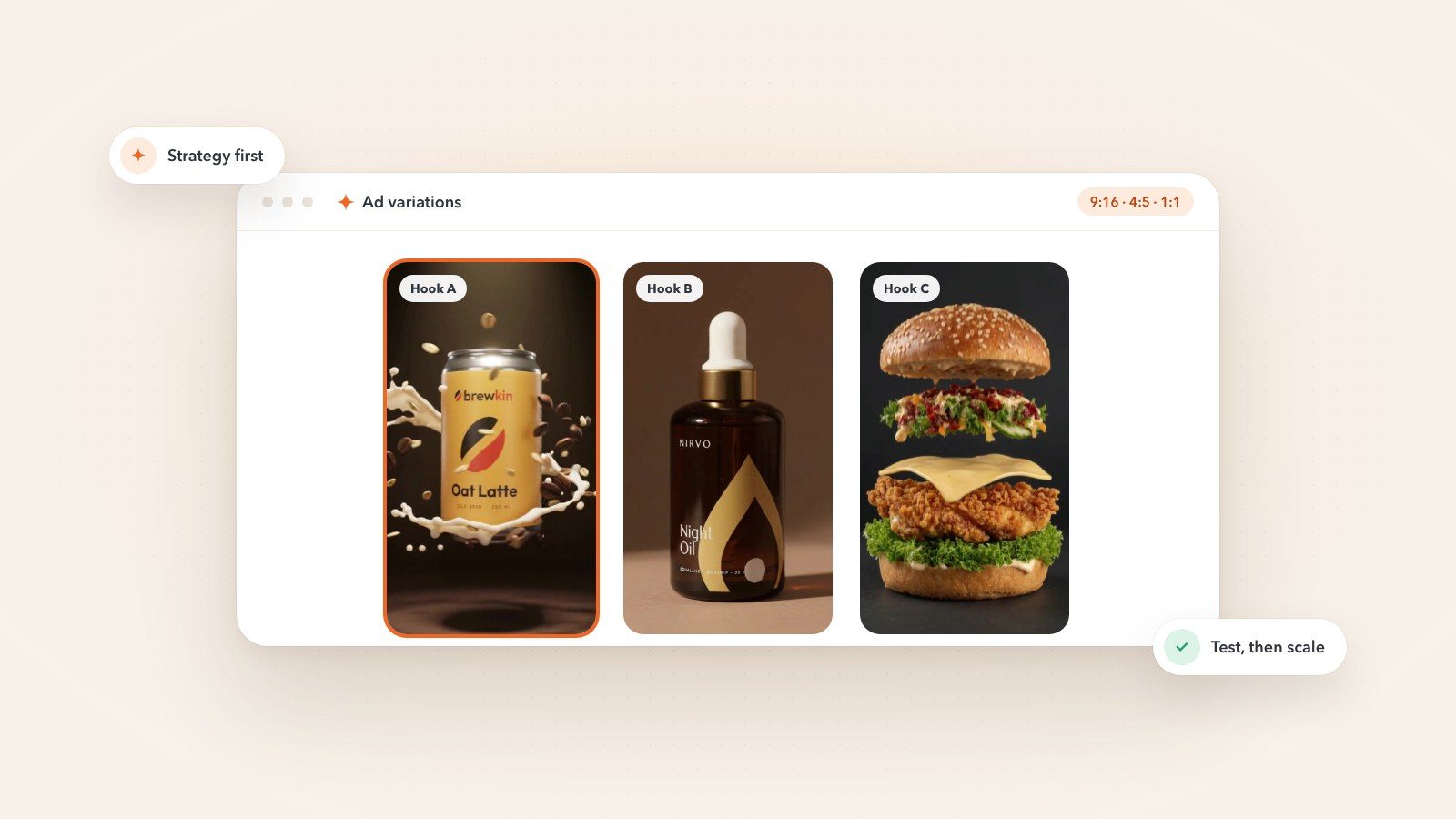
AI avatar ads make it easier to test different hooks, offers, messages, and calls to action.
For example, a brand can create three versions of the same ad:
- One focused on a customer problem
- One focused on a product benefit
- One focused on a special offer
Then it can test which version generates better results.
4. Multilingual Localization
AI avatars can help brands create versions of the same ad in different languages. This can be useful for businesses targeting multiple regions or language groups.
However, translation should still be reviewed by a creative to ensure cultural relevance, correct tone, and accurate messaging.
5. Consistent Brand Presentation
A brand can use the same avatar, voice style, visual style, and messaging structure across multiple ads. This can help create consistency, especially for educational or explanatory content.
6. Useful for Explainer Content
AI avatar ads work well when the goal is to explain something clearly. They can be used for product demos, service explanations, onboarding videos, FAQs, and educational campaigns.
Cons of AI Avatar Video Ads
1. They Can Feel Artificial
The biggest risk with AI avatar ads is that they can feel unnatural. If the avatar’s facial expressions, voice, or movements look robotic, viewers may lose trust.
This is especially important for products that require emotional connection, personal experience, or high trust.
2. They May Not Build Deep Trust
Real people can share real experiences. AI avatars cannot genuinely use a product, have a personal story, or provide authentic social proof.
For this reason, AI avatar ads may not be the best choice for testimonials, health claims, or high-ticket purchases.
3. Generic Scripts Can Hurt Performance
Many AI avatar ads fail because the script is too generic. Phrases like “Our innovative solution helps businesses grow” do not create a strong connection with the viewer.
A better script focuses on a specific problem, a clear benefit, and a direct call to action.
4. Overuse Can Reduce Impact
If every ad uses the same avatar and similar delivery, viewers may get tired of seeing it. Creative fatigue can reduce engagement over time.
5. Brand Safety Risks
AI-generated content can include inaccurate claims, awkward visuals, or off-brand messaging. Every ad should be reviewed by a creative before publishing.
When AI Avatar Ads Work Best
AI avatar ads work best when the goal is to explain, educate, or simplify a message.
They are especially useful for:
- SaaS product explanations
- App onboarding
- Service introductions
- Educational content
- FAQ videos
- Course promotions
- Local service businesses
- Multilingual campaigns
- Quick ad testing
- Explaining a complex offer
For example, a SaaS company can use an AI avatar to explain how its software saves time, reduces manual work, or improves team productivity. The ad can show the product interface while the avatar explains the benefit.
When AI Avatar Ads Do Not Work Best
AI avatar ads may not be the best choice when the campaign depends on authenticity, emotion, or personal experience.
They may underperform for:
- Customer testimonials
- Health and wellness claims
- Luxury brands
- High-ticket products
- Emotional storytelling
- Founder-led brand campaigns
- Products that require live demonstration
- Campaigns that depend on real social proof
In these cases, real creators, customers, founders, or professional actors may create a stronger connection.
Best Use Cases by Industry
E-commerce
AI avatar ads can work for e-commerce when the goal is to explain a product, highlight an offer, or answer common questions.
For example, an avatar can explain how a product works, show key features, and direct viewers to a product page. However, real customer UGC may be stronger for reviews and social proof.
SaaS and Apps
SaaS and app brands can benefit from AI avatar ads because they often need to explain features and simplify complex ideas.
A strong ad may start with a problem such as “Still managing your tasks manually?” and then show how the app solves it.
Local Services
Local service businesses can use AI avatar ads to introduce their services, explain pricing, and generate leads.
For example, a dental clinic can use an avatar to explain a teeth whitening offer, while showing before-and-after visuals or clinic footage.
Education
Education brands can use AI avatar ads to explain course benefits, answer student questions, and promote free resources.
A strong ad may focus on a specific outcome, such as learning a skill, getting a job, or improving a business result.
B2B Services
B2B companies can use AI avatar ads to explain complex services, introduce offers, and generate leads.
For example, an avatar can explain how a service saves time, reduces cost, or improves business performance.
How to Make AI Avatar Ads Feel Natural
Use Conversational Language
Write the script as if someone is speaking to a friend. Use short sentences, simple words, and natural pacing.
For example:
- Weak: “Our innovative platform enables businesses to optimize operational efficiency.”
- Strong: “If you are still managing everything manually, this can save you hours every week.”
The second version sounds more natural and relatable.
Keep the Video Short
Most AI avatar ads should be between 15 and 45 seconds. Longer videos can lose attention, especially on social platforms.
Start With a Strong Hook
The first 1–3 seconds should grab attention.
Examples:
- “If you struggle with ___, watch this.”
- “Here is why your ___ is not working.”
- “This is the fastest way to ___.”
- “Stop doing this if you want better ___.”
A strong hook should make the viewer feel that the ad is relevant to them.
Show the Product or Service Early
Do not wait until the end to show what you are offering. Show the product, app, service, or result early in the video.
Add Captions
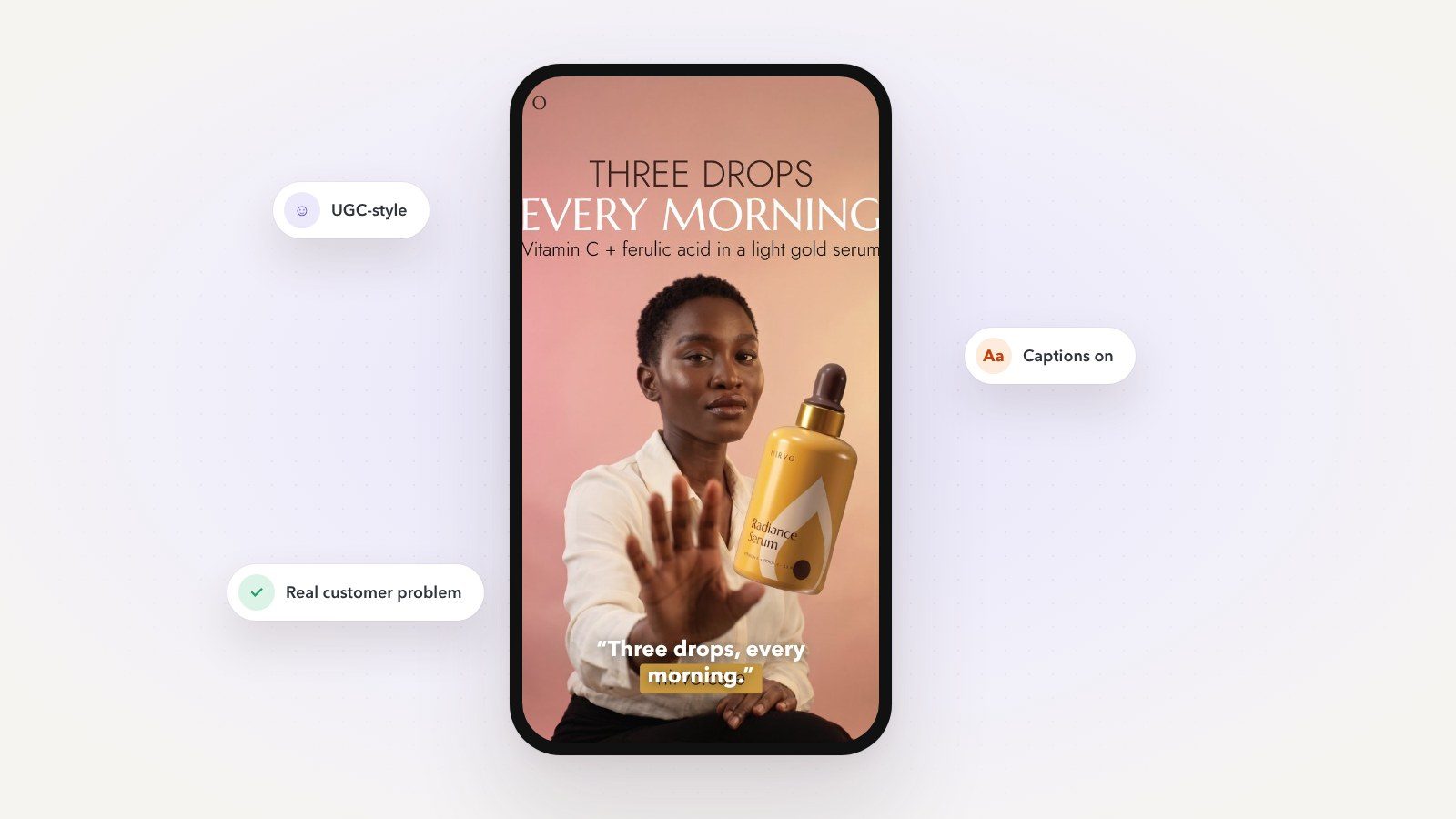
Many people watch social videos without sound. Add clear captions and on-screen text so the message is easy to understand.
Use One Clear CTA
End with one specific action:
- Book a call
- Get a quote
- Start free trial
- Learn more
- Shop now
- Download the app
A single clear CTA usually performs better than multiple CTAs.
Common Mistakes to Avoid
Using AI Without a Strategy
AI can generate content quickly, but it cannot decide what a brand should say. Without strategy, brands often produce generic ads that fail to connect with the audience.
Making the Avatar the Main Focus
The avatar should support the message, not replace it. The most important part of the ad is still the customer problem, benefit, and call to action.
Using Unrealistic Claims
Do not use AI to create exaggerated claims or fake testimonials. Keep the messaging honest, clear, and compliant with advertising policies.
Ignoring Brand Guidelines
Use brand guidelines, approved colors, fonts, tone of voice, and visual references to keep content recognizable.
Not Testing Variations
One AI avatar ad cannot tell you what works. Create multiple variations so you can test hooks, offers, visuals, and CTAs.
How to Test AI Avatar Ads
A simple testing framework is:
- Create 3–5 creative angles
- Make 2–3 hook variations for each angle
- Run the ads to a defined audience
- Track hook rate, CTR, cost per result, and ROAS
- Identify the winning angle
- Create more variations based on the winner
- Retire weak creative and refresh the campaign
For example, if a “problem-focused” hook performs better than a “product-focused” hook, create more ads around that problem. If a specific CTA performs better, test similar CTAs in future ads.
Metrics to Track
Track these metrics to understand performance:
- Hook rate
- 3-second view rate
- Thumb-stop ratio
- Click-through rate
- Conversion rate
- Cost per lead
- Cost per purchase
- ROAS
- Creative fatigue
Do not judge an ad only by views. A video may get attention but fail to generate business results.
How Asian Pixel Uses AI Avatar Ads
Asian Pixel uses AI avatar ads as part of a broader AI video ad system. The goal is not simply to create more videos, but to create ads that support testing, learning, and business growth.
A strong AI avatar ad system includes:
- Audience and offer analysis
- Creative angle development
- Scriptwriting
- Avatar selection
- Voiceover direction
- AI-assisted production
- Captions and on-screen text
- Brand-consistency checks
- Creative testing
- Performance reporting
This approach helps brands create more variations, test faster, and identify the messages that drive results.
Final Thoughts
AI avatar video ads can be a useful tool for brands that need to explain offers, educate audiences, and test creative quickly. They are especially effective for SaaS, apps, local services, education, and B2B marketing.
However, they are not a replacement for authentic creator content. The best strategy is often a mix: use AI avatars for explanation and testing, and use real creators, customers, or founders for trust and social proof.
If you want to get better results from AI avatar ads, focus on the fundamentals: a clear offer, a specific audience, a strong hook, a believable message, and continuous testing.