Key takeaways
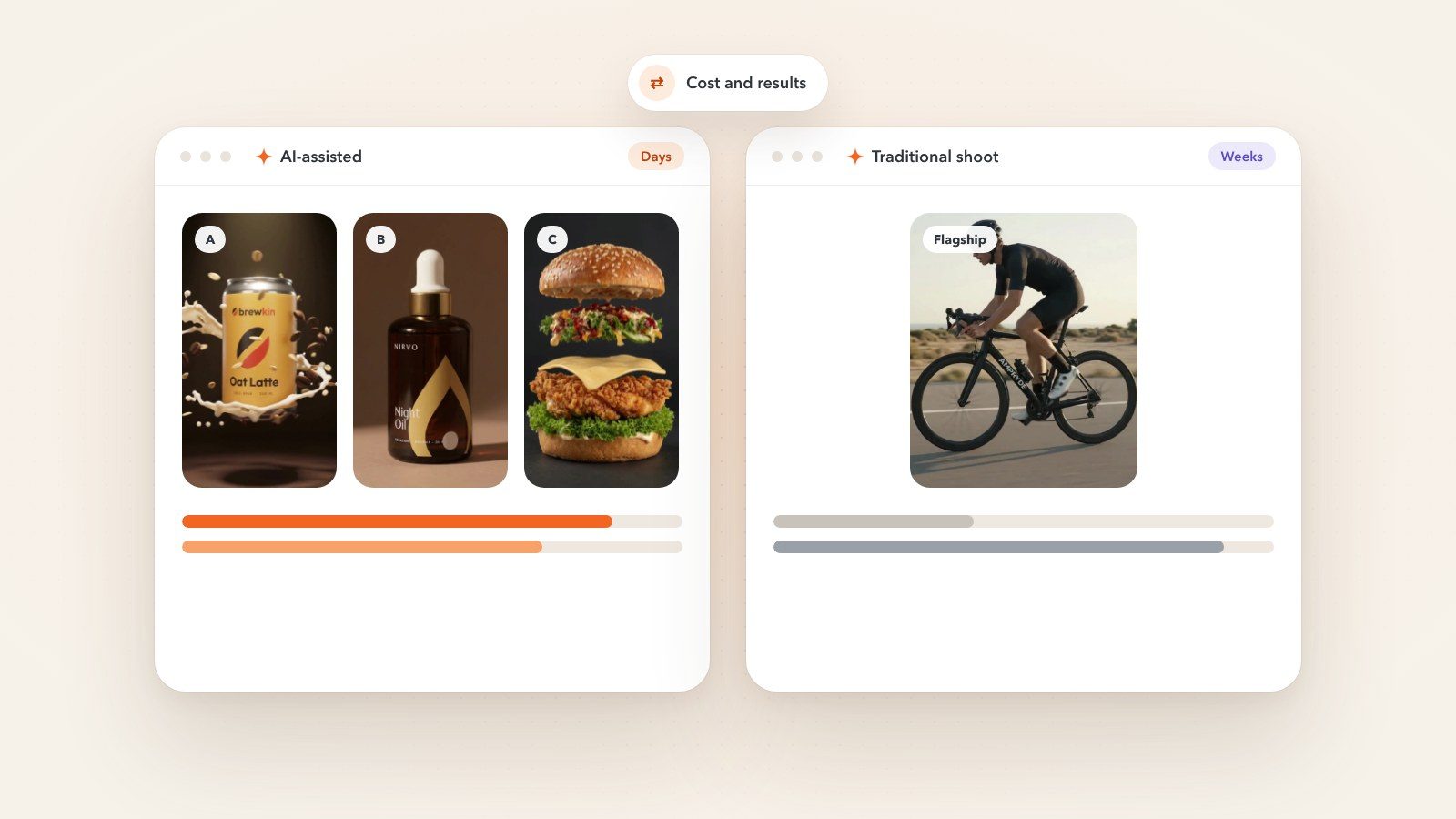
- AI is best for speed, testing and scale; traditional production is best for control, premium quality and storytelling.
- Compare them on cost, speed, quality and results, not on price alone.
- Use traditional production for flagship brand assets and AI-assisted production for performance testing and scaling.
- Whatever the method, results come from a clear offer, a strong hook and continuous testing.
AI video ads and traditional video production both can create strong advertising creative, but they solve different problems. AI video ads are built for speed, testing, and scale. Traditional production is built for control, premium quality, and high-impact brand storytelling.
The best choice is not always “AI vs traditional.” Many successful brands use both: traditional production for flagship brand assets and AI-assisted production for performance testing, creative variations, and ongoing campaign refreshes.
What Are AI Video Ads?
AI video ads use artificial intelligence during one or more stages of production. AI may help generate visuals, voiceovers, scripts, captions, scenes, product presentations, or multiple versions of the same ad.
However, AI video ads are not just videos made by an AI tool. They still require creative strategy, audience insight, brand direction, and creative review. The best results come from combining AI speed with strategic creative thinking.
What AI Can Do
AI can help brands:
- Generate product visuals and scene variations
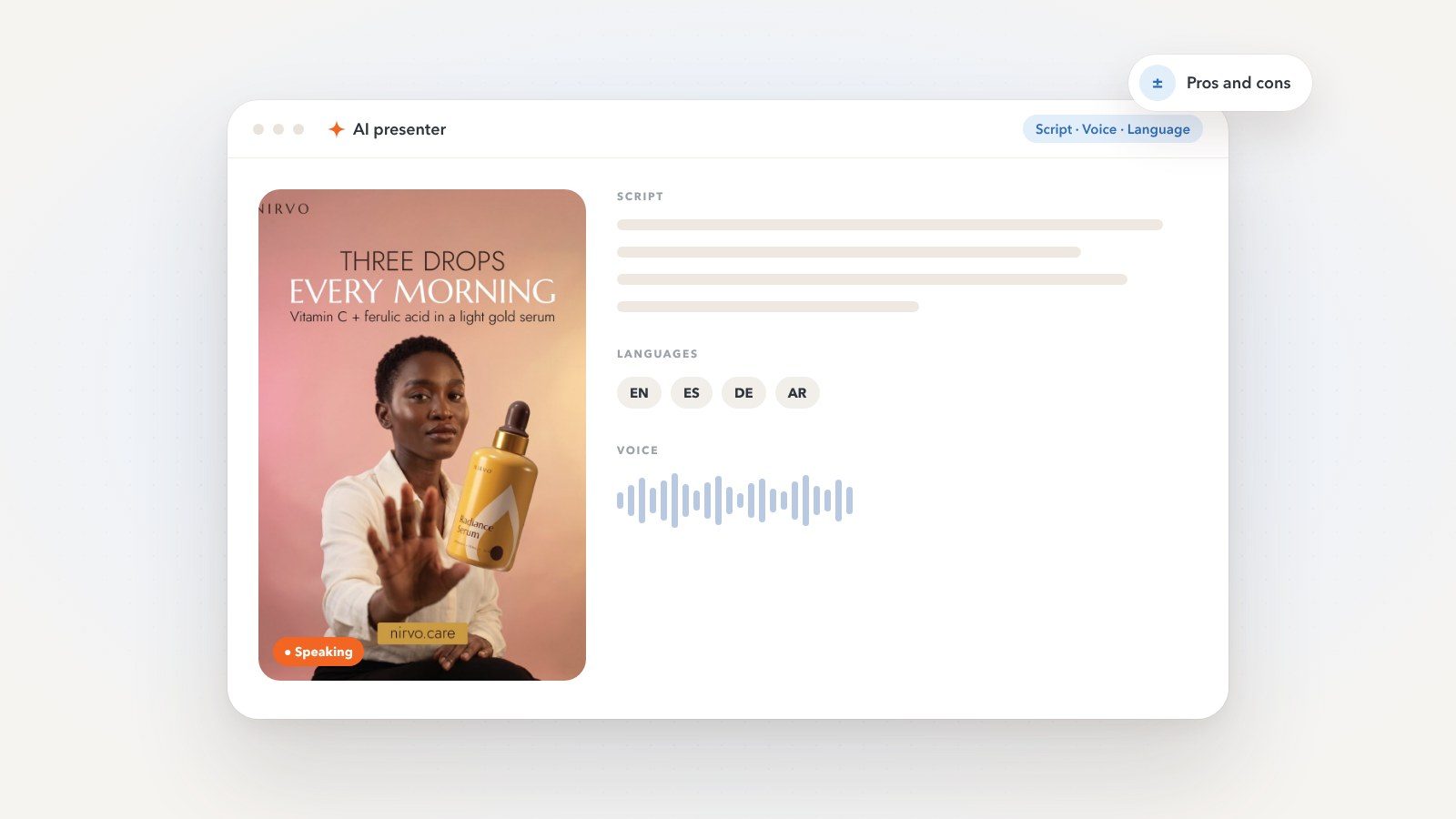
- Create voiceovers in different languages or tones
- Write ad scripts and captions
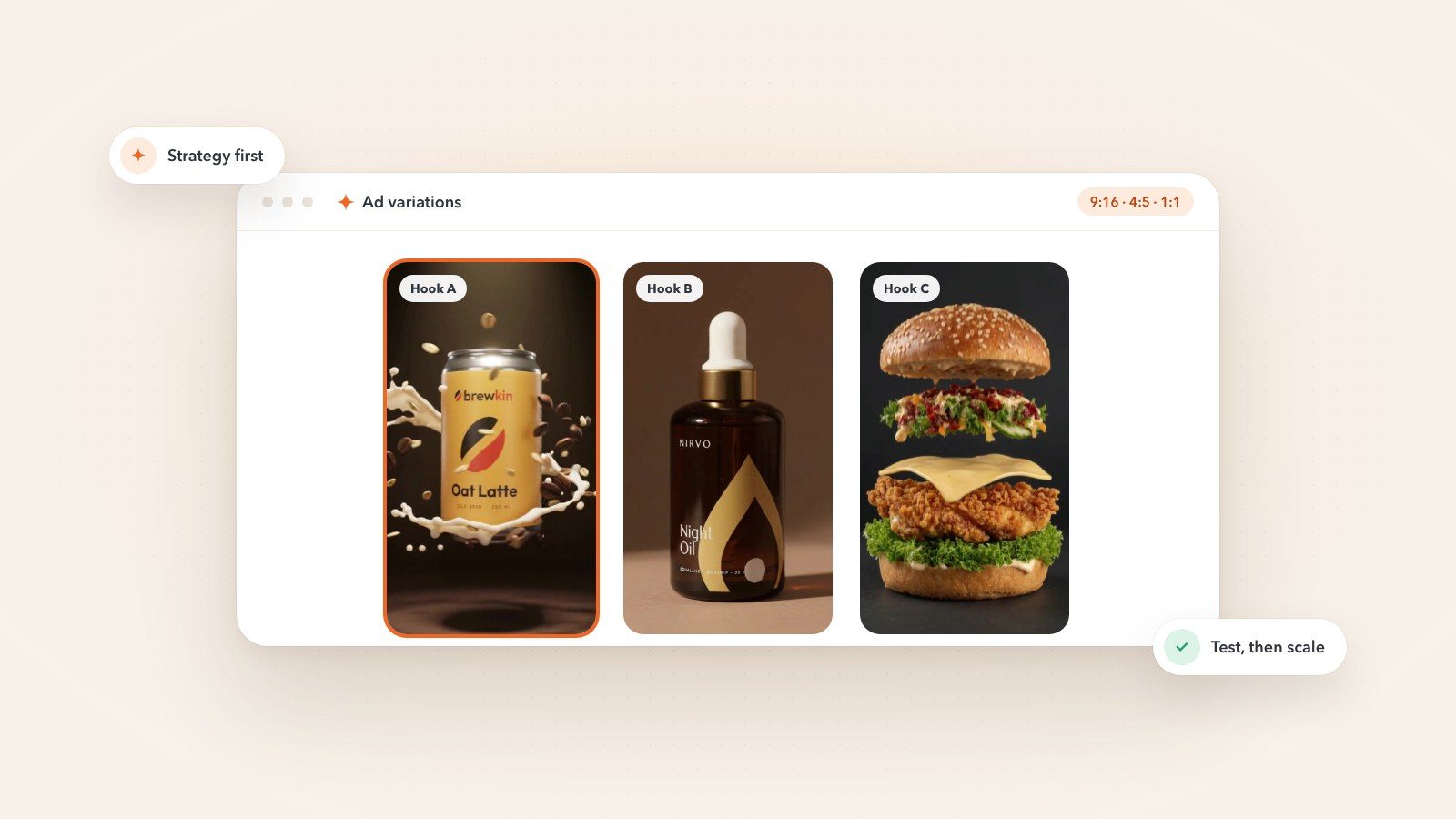
- Produce multiple hook variations
- Turn static product images into motion visuals
- Localize ads for different markets
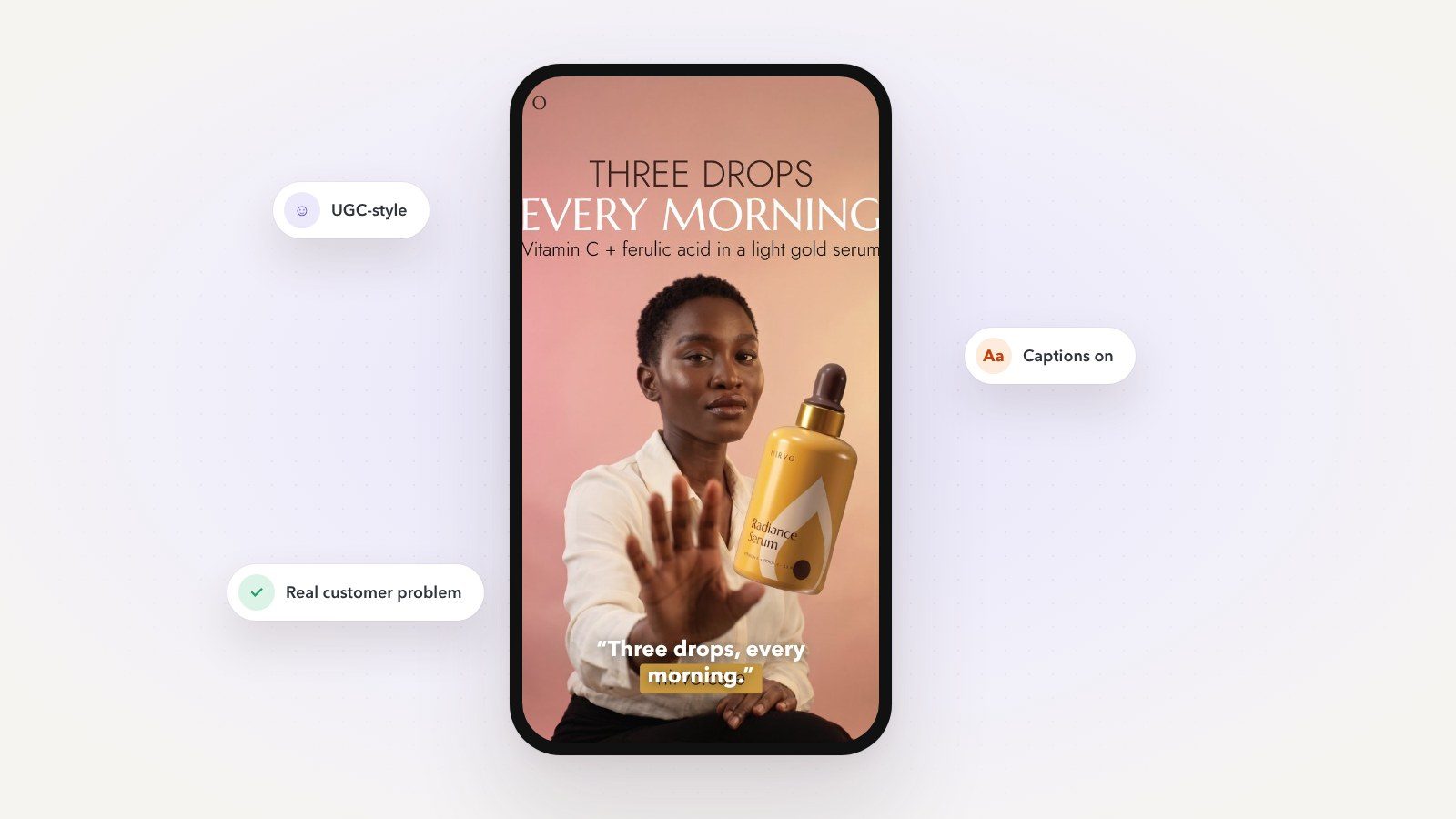
- Create UGC-style concepts
- Speed up editing and repurposing
What AI Cannot Replace
AI cannot fully replace:
- Brand strategy
- Market positioning
- Customer insight
- Creative judgment
- Cultural understanding
- Compliance and brand-safety review
- Conversion-focused storytelling
The best results come from combining AI speed with creative strategic thinking.
What Is Traditional Video Production?
Traditional video production involves planning, filming, editing, and post-production using real people, locations, equipment, and often a production team.
It can include:
- Live-action filming
- Professional actors or creators
- Studio or location shoots
- Product photography
- Cinematic lighting
- Professional sound recording
- Advanced editing and color grading
- Motion graphics and visual effects
Traditional production gives brands more control over the final look, feel, and storytelling. It is often the better choice when the goal is to create a premium brand asset.
AI video ads and traditional production are not competitors. They are different tools for different goals.
AI Video Ads vs Traditional Production
AI video ads do not automatically replace traditional production. The smartest brands use both: traditional production for premium brand assets and AI-assisted production for performance testing and scaling.
Cost Comparison
The cost of a video ad depends on many factors, including the concept, talent, location, equipment, editing, motion graphics, revisions, and usage rights.
AI video ads usually reduce the cost per variation because they can reuse assets, scripts, templates, and visual elements across multiple ads. Traditional production usually has higher upfront costs because each shoot requires planning, crew, talent, equipment, and post-production.
AI Video Ad Costs
AI video ad costs can be lower because AI reduces the need for repeated filming. A brand can create multiple variations from one product shoot, one script structure, or one set of visual assets.
Typical AI video ad costs include:
- Creative strategy
- Scriptwriting
- AI tool subscriptions
- Avatar or voice generation
- Image or video generation
- Editing
- Captions
- Revisions
- Platform-specific versions
AI video ad subscriptions and agency services can range widely depending on the level of strategy, production quality, and volume. Some done-for-you video ad subscriptions start around a few hundred dollars per month, while premium agencies may charge several thousand dollars per month.
Traditional Production Costs
Traditional production costs can be higher because each shoot requires more resources.
Typical traditional production costs include:
- Pre-production planning
- Scriptwriting
- Casting
- Location rental
- Equipment rental
- Crew
- Talent fees
- Product styling
- Filming
- Editing
- Color grading
- Sound design
- Revisions
- Usage rights
Traditional production can be worth the investment when the brand needs a premium, high-control asset that will be used across many channels.
Speed Comparison
AI video ads are usually faster because they reduce the need for repeated shoots. A brand can create multiple variations from one product shoot, one script structure, or one set of visual assets.
Traditional production usually takes longer because each shoot requires planning, scheduling, filming, and post-production. However, traditional production can still be efficient when the brand has a clear brief, strong creative direction, and an experienced production team.
Quality Comparison
Quality is not only about visuals. It is also about message clarity, brand consistency, emotional impact, and conversion performance.
AI video ads can look impressive, but they can also look generic if the strategy is weak. Traditional production can create a more premium feel, but it can also fail if the script, hook, or offer is unclear.
What Makes a Video Ad High Quality?
A high-quality video ad usually has:
- A clear offer
- A specific audience
- A strong hook
- A simple message
- Clear visuals
- Good pacing
- Strong captions
- A clear call to action
- Brand consistency
- A measurable result
These factors matter more than whether the video was made with AI or traditional production.
Results Comparison
The real test is not which method looks better. The real test is which method produces better business results.
AI video ads often perform well when a brand needs to test many ideas quickly. Traditional production often performs well when a brand needs one strong, premium asset for a major campaign.
When AI Video Ads Produce Better Results
AI video ads can produce better results when:
- You need to test 10–30 creative variations quickly
- You want to reduce production delays
- You need to localize ads for different languages
- You want to test different customer pain points
- You need to refresh ads frequently
- You want to scale a winning message across audiences
- You need to create platform-specific versions
- You want to test offers without waiting for a new shoot
For example, if a brand discovers that a “problem-focused” hook performs well, it can quickly create more variations around that hook using AI. With traditional production, the same process may require additional briefs, shoots, edits, and approvals.
When Traditional Production Produces Better Results
Traditional production can produce better results when:
- You need a premium brand film
- You need a high-end product launch
- You need complex live-action storytelling
- You need celebrity or influencer content
- You need large-scale cinematic visuals
- You need highly controlled brand messaging
- You need a flagship asset for multiple channels
In these cases, traditional production may create a stronger emotional impact and a more premium brand experience.
When to Use AI Video Ads
AI video ads work best when a brand needs:
- More creative variations
- Faster campaign testing
- Lower production costs
- Platform-specific ads
- UGC-style content at scale
- Product-focused paid social campaigns
- Ongoing creative refreshes
They are especially useful for e-commerce, SaaS, apps, local services, education, healthcare marketing, and consumer brands that need to test messaging quickly.
When to Use Traditional Production
Traditional production may still be better when a brand needs:
- A premium brand film
- A high-end product launch
- Complex live-action storytelling
- Celebrity or influencer content
- Large-scale cinematic visuals
- Highly controlled brand messaging
AI video ads and traditional production are not competitors. They are different tools for different goals.
Best Approach: Use Both
The smartest brands do not choose between AI and traditional production. They use both strategically.
A simple approach is:
- Use traditional production for one strong brand asset
- Use AI to create multiple variations from that asset
- Test different hooks, offers, and messages
- Identify the winning creative
- Scale the winning message with AI-assisted variations
- Refresh creative regularly to avoid fatigue
This approach gives brands both premium quality and testing speed.
Common Mistakes to Avoid
Choosing AI Only for Cost
AI can reduce cost, but it cannot replace strategy. If the message is weak, the ad will not perform well even if it was cheap to produce.
Choosing Traditional Production Only for Quality
Traditional production can create a premium feel, but it can also be slow and expensive. If the brand needs to test many messages, AI may be more effective.
Ignoring Creative Testing
One video cannot tell you what your audience responds to. Create multiple variations so you can learn which creative angle works best.
Ignoring Brand Consistency
AI-generated visuals can look impressive but inconsistent. Use brand guidelines, approved colors, fonts, tone of voice, and visual references to keep content recognizable.
Not Reviewing Output
AI can produce inaccurate claims, awkward visuals, or off-brand messaging. Always review scripts, visuals, captions, and claims before publishing.
How to Measure Results
Do not judge an ad only by views. A video may get views but fail to generate leads or sales.
Track these metrics:
- Hook rate
- 3-second view rate
- Click-through rate
- Conversion rate
- Cost per lead
- Cost per purchase
- ROAS
- Creative fatigue
These metrics help you understand not only whether an ad looks good, but whether it supports business growth.
How Asian Pixel Approaches AI and Traditional Production
Asian Pixel combines AI tools, creative strategy, editing, motion design, copywriting, and advertising thinking to create high-performing video ads. The goal is not simply to generate content quickly, but to create ads that support brand growth and campaign performance.
A strong video ad system includes:
- Creative strategy
- Audience and offer analysis
- Ad concept development
- Scriptwriting and hooks
- AI-assisted production
- Motion graphics and editing
- Brand-consistency checks
- Creative variations
- Performance reporting
This approach helps brands move beyond one-off videos and build a repeatable creative system.
Final Thoughts
AI video ads and traditional production are not competitors. They are different tools for different goals. AI is best for speed, testing, and scale. Traditional production is best for control, premium quality, and high-impact storytelling.
The best strategy is often a mix: use traditional production for flagship brand assets and AI-assisted production for performance testing and scaling.
If you want to get better results from video ads, focus on the fundamentals: a clear offer, a specific audience, a strong hook, a believable message, and continuous testing.
Frequently asked questions
What Are AI Video Ads?
AI video ads use artificial intelligence during one or more stages of production. AI may help generate visuals, voiceovers, scripts, captions, scenes, product presentations, or multiple versions of the same ad.
What Is Traditional Video Production?
Traditional video production involves planning, filming, editing, and post-production using real people, locations, equipment, and often a production team.