Key takeaways
- AI UGC ads recreate the native, creator-style format with AI, so brands can test more messages faster.
- They work best for testing hooks, angles, audiences and localised versions at volume.
- Real creators still win where trust, personal stories and real product use matter most.
- The strongest approach mixes both, built on a clear offer, a specific audience and continuous testing.
AI UGC ads are advertisements designed to look like authentic user-generated content, but created or enhanced with artificial intelligence. They can include AI-generated scripts, voiceovers, avatars, product visuals, captions, and multiple ad variations. The goal is to combine the natural, relatable feel of UGC with the speed and scalability of AI-powered production.
For brands running paid social campaigns, AI UGC ads can be a powerful way to test more creative ideas without waiting for a new creator shoot every time. However, they are not always better than real creator content. The best approach depends on the product, audience, platform, budget, and campaign goal.
What Are AI UGC Ads?
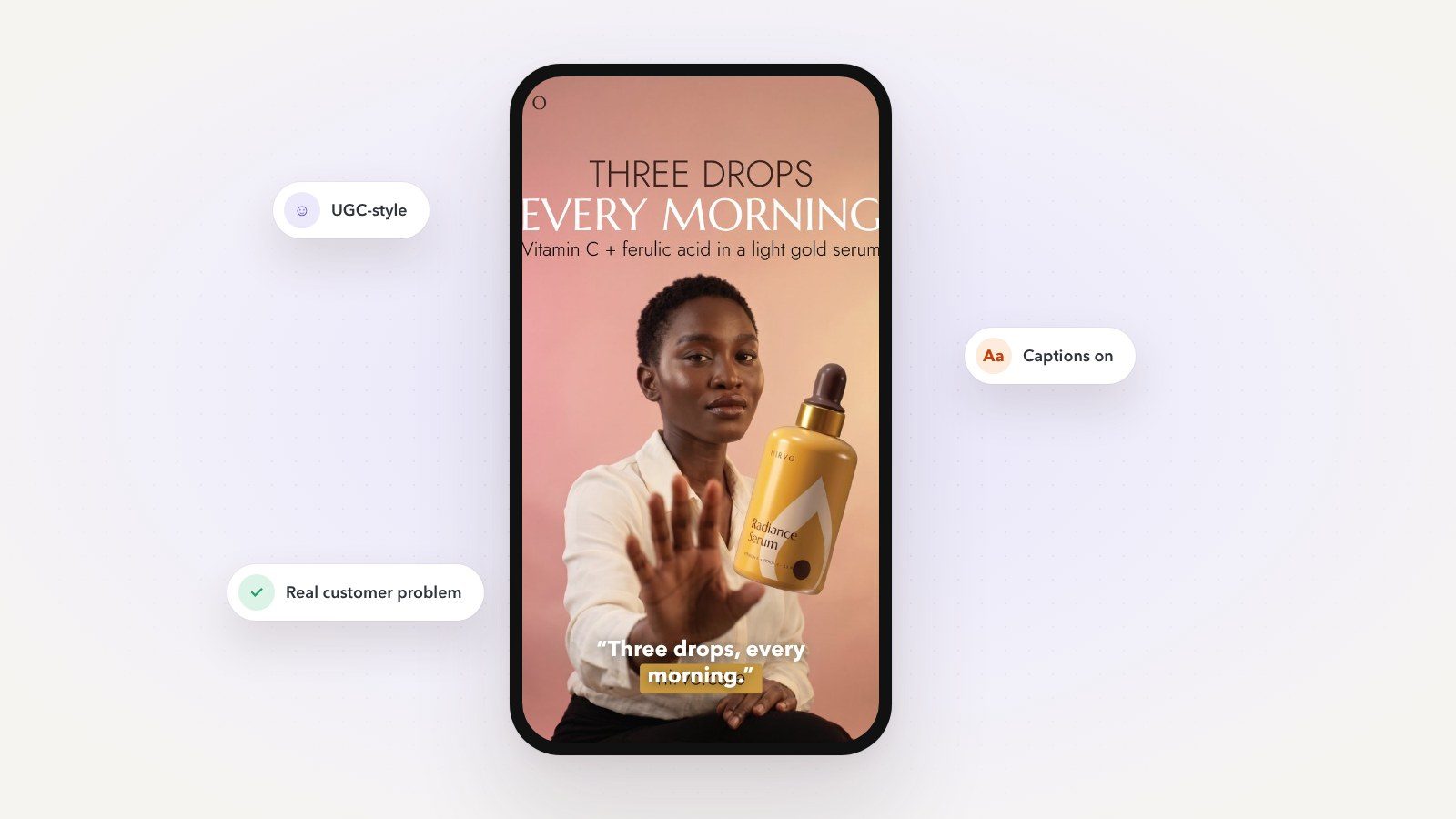
UGC stands for user-generated content. In advertising, UGC-style ads usually look like a real customer, creator, or everyday person talking about a product, demonstrating it, or sharing an experience.
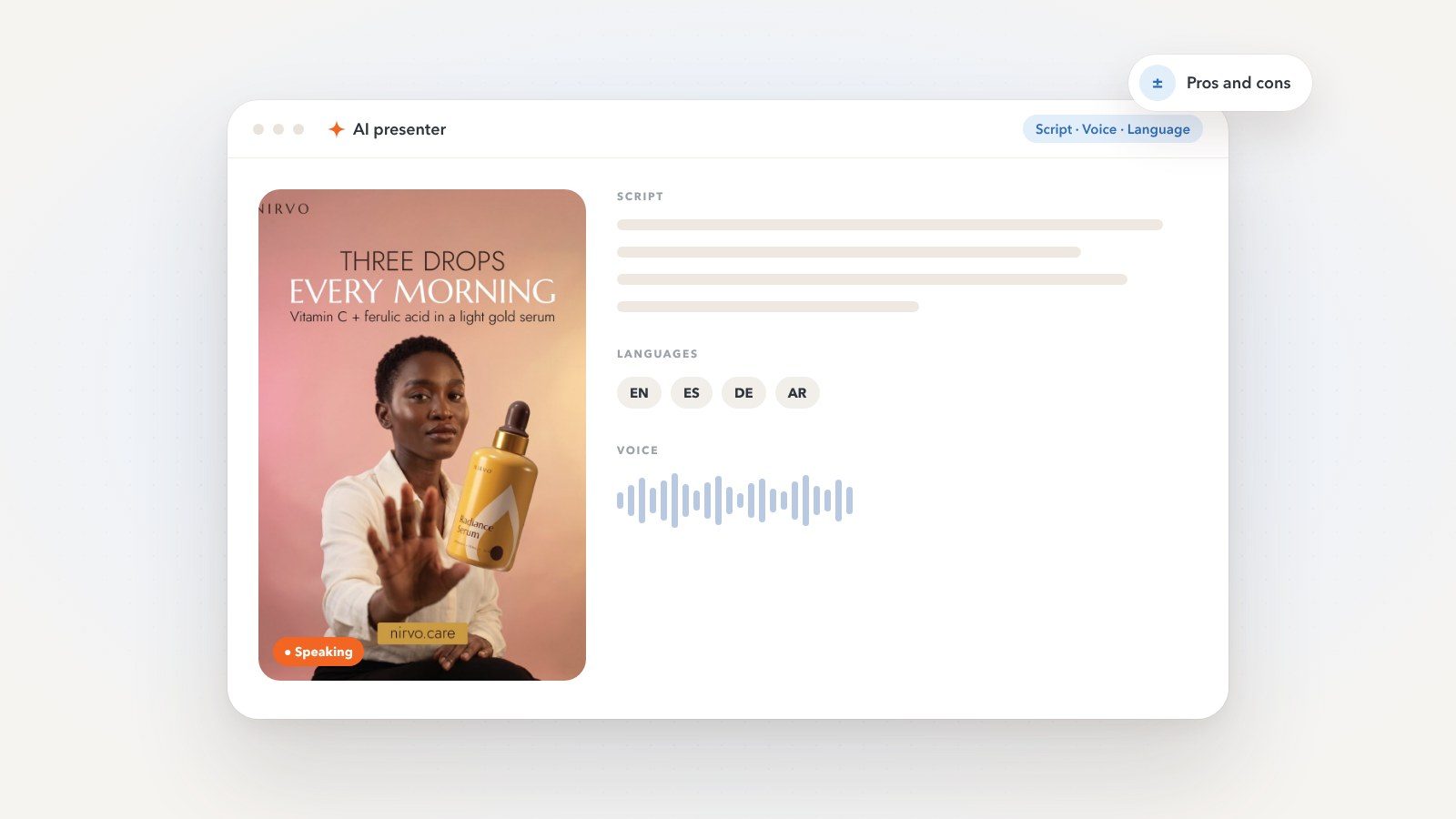
AI UGC ads use AI to create or support this format. For example, a brand may use an AI avatar to present a product, generate a voiceover from a script, create product scenes, or produce multiple versions of the same ad for testing.
What Makes an Ad Feel Like UGC?
A UGC-style ad usually has:
- A conversational, first-person script
- A simple, direct hook
- Natural speech and casual language
- A product demonstration or personal experience
- Vertical video format
- Captions and on-screen text
- A clear call to action
- A relatable problem or benefit
The most important part is not whether the video was made by a creative team or AI. The most important part is whether it feels believable, useful, and relevant to the viewer.
How AI UGC Ads Work
AI UGC ads usually follow a simple production process:
- Define the customer problem and product benefit
- Write a conversational script
- Create a hook and call to action
- Generate or select an AI avatar, voice, or visual style
- Produce the video with AI-assisted editing
- Add captions, on-screen text, and branding
- Create multiple variations for testing
- Review the final ad for accuracy, tone, and brand consistency
AI can speed up many of these steps, but a creative should still control the strategy, messaging, and final approval.
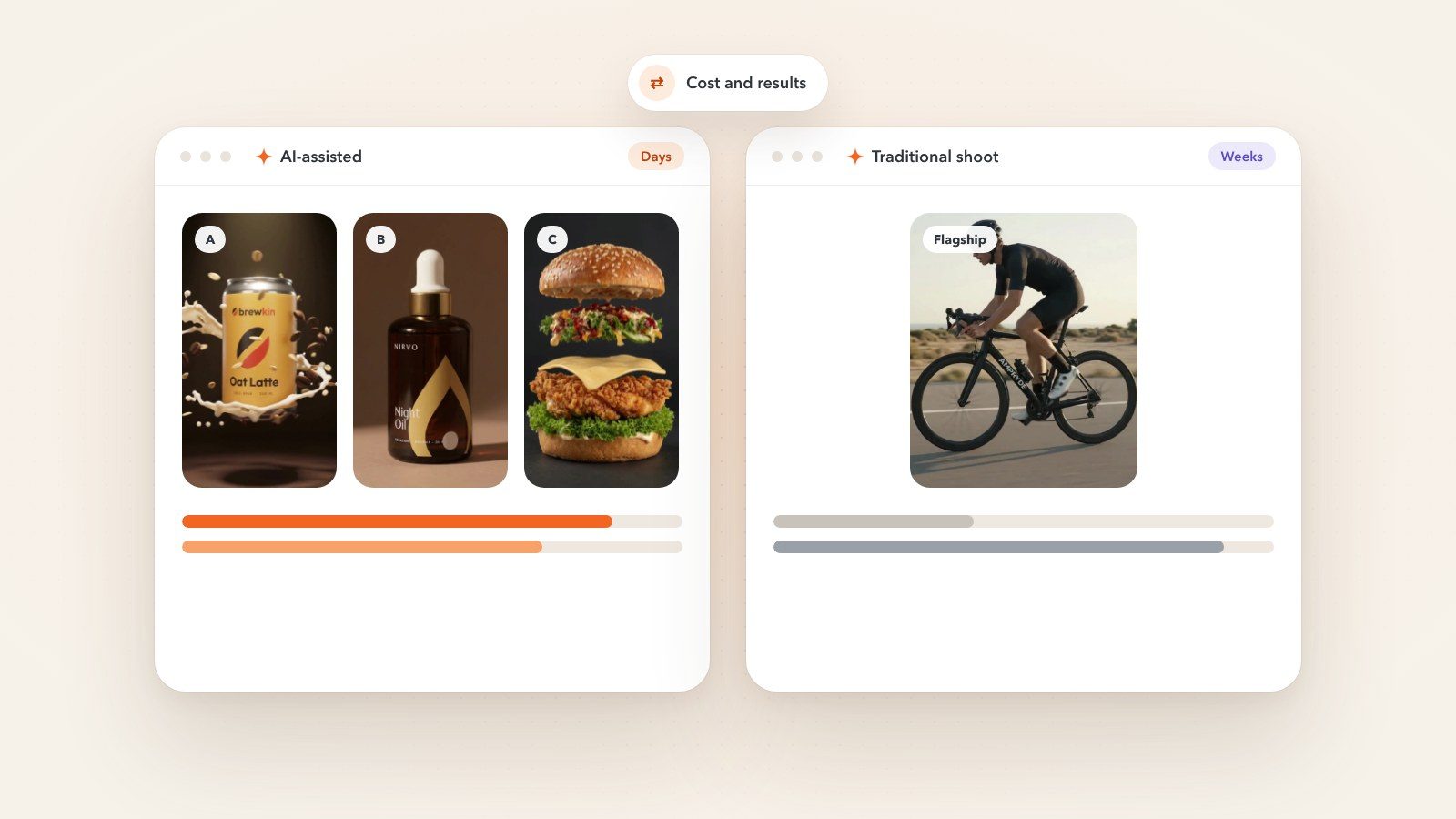
Use real creators for trust and social proof, and use AI UGC ads for testing, scaling, and creative variation.
AI UGC Ads vs Real Creator UGC
Real creator UGC is made by an actual person who uses, reviews, or talks about a product. It can feel highly authentic because the creator has a real face, voice, personality, and personal experience.
AI UGC ads are faster and easier to scale. They can help brands test more hooks, messages, and visual styles without coordinating a new shoot for every idea.
AI UGC ads are best viewed as a testing and scaling tool. Real creator UGC is often better for building trust, especially when the creator has genuine experience with the product.
When AI UGC Ads Work Best
AI UGC ads work best when a brand needs to move quickly and test many ideas.
They are especially useful for:
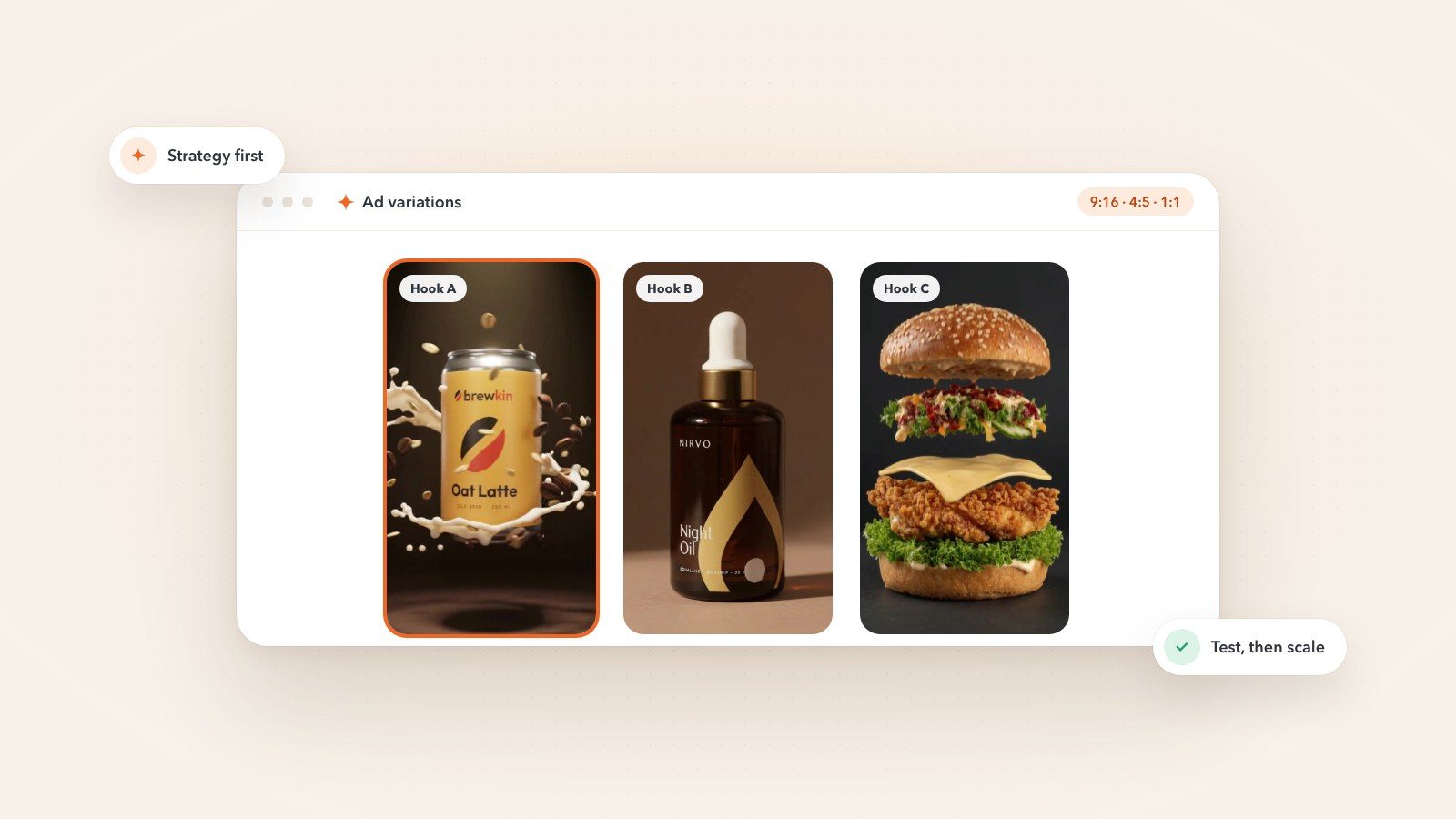
- Testing new hooks and messaging
- Creating multiple ad variations
- Launching a new product or offer
- Producing ads for multiple audiences
- Localizing content for different markets
- Creating ads for platforms like TikTok, Reels, and YouTube Shorts
- Reducing dependency on creator availability
- Supporting a performance creative system
For example, an e-commerce brand can create five versions of the same product ad using different hooks, benefits, and calls to action. Then it can test which version generates the best click-through rate, cost per purchase, or return on ad spend.
When Real Creators Are Better
Real creators are usually better when trust, personality, and genuine experience matter most.
They work best for:
- High-ticket products
- Health and wellness products
- Beauty and skincare
- Supplements
- Financial services
- B2B services
- Products that require demonstration
- Brands building long-term creator partnerships
A real creator can share a personal story, show real usage, respond naturally, and create a stronger emotional connection. That authenticity can be difficult to replicate with AI alone.
When AI UGC Ads Beat Real Creators
AI UGC ads can outperform real creator content when speed, volume, and testing matter more than a single polished piece of content.
They can beat real creators when:
- You need to test 10–30 creative variations quickly
- You want to reduce production delays
- You need to localize ads for different languages
- You want to test different customer pain points
- You need to refresh ads frequently
- You want to scale a winning message across audiences
- You need to create platform-specific versions
- You want to test offers without waiting for a new shoot
For example, if a brand discovers that a “problem-focused” hook performs well, it can quickly create more variations around that hook using AI. With real creators, the same process may require additional briefs, shoots, edits, and approvals.
Best Use Cases for AI UGC Ads
E-commerce Products
E-commerce brands can use AI UGC ads to show product benefits, demonstrate usage, highlight offers, and test different customer motivations.
For example, a skincare brand can create separate ads for acne, dry skin, dullness, and anti-aging concerns. Each ad can use a different hook, visual style, and call to action.
Apps and SaaS
Apps and SaaS companies can use AI UGC ads to explain features, show screen recordings, simplify onboarding, and address common objections.
A strong ad may start with a problem such as “Still managing your tasks manually?” and then show how the app solves it in a few simple steps.
Local Services
Local service businesses can use AI UGC ads to explain their offer, build trust, and generate leads.
For example, a dental clinic can create ads around teeth whitening, braces, emergency care, or affordable treatment options. Each ad can target a different customer concern.
Education and Courses
Education brands can use AI UGC ads to explain course benefits, address student objections, and promote free resources.
A strong ad may focus on a specific outcome, such as learning a skill, getting a job, or improving a business result.
How to Create High-Performing AI UGC Ads
Start With a Real Customer Problem
Do not start with the product. Start with the problem the customer wants to solve.
Ask:
- What frustrates your customer?
- What are they trying to achieve?
- What stops them from buying?
- What result do they want?
- What objection do they have?
A strong AI UGC ad begins with a specific problem, not a generic product introduction.
Write Like a Real Person
Avoid overly polished corporate language. Use simple words, short sentences, and conversational phrasing.
For example:
- Weak: “Our innovative solution helps customers achieve better outcomes.”
- Strong: “I was tired of wasting time every week. This made it so much easier.”
The second version sounds more natural and relatable.
Use a Strong Hook
The first 1–3 seconds should stop the scroll.
Examples of strong hooks:
- “I wish I knew this before buying…”
- “If you struggle with ___, watch this.”
- “This is why your ___ is not working.”
- “I tried ___ for 30 days. Here is what happened.”
- “Stop doing this if you want better ___.”
A good hook should make the viewer feel that the ad is relevant to them.
Show the Product Clearly
Even in a UGC-style ad, the product should be visible early. Show how it works, what it looks like, and what result it creates.
Avoid hiding the product behind too much talking or unnecessary visuals.
Add Captions
Many people watch social videos without sound. Add clear captions and on-screen text so the message is easy to understand.
Use One Clear CTA
End with one specific action:
- Shop now
- Learn more
- Book a call
- Get a quote
- Start free trial
- Download the app
Do not use multiple CTAs in the same ad. A single clear action usually performs better.
Common Mistakes With AI UGC Ads
Making the Ad Look Too Artificial
If the avatar, voice, or visuals look unnatural, viewers may lose trust. Use natural language, realistic pacing, and clean visuals.
Using Generic Scripts
Generic scripts such as “Check out our amazing product” rarely perform well. Make the message specific to a customer problem, desire, or objection.
Creating Only One Version
One AI UGC ad cannot tell you what works. Create multiple variations so you can test hooks, offers, visuals, and CTAs.
Ignoring Brand Guidelines
AI can create content quickly, but it can also create inconsistent visuals or messaging. Use brand guidelines, approved colors, fonts, and tone of voice.
Making Unrealistic Claims
Do not use AI to create exaggerated claims or fake testimonials. Keep the messaging honest, clear, and compliant with advertising policies.
How to Test AI UGC Ads
A simple testing framework is:
- Create 3–5 creative angles
- Make 2–3 hook variations for each angle
- Run the ads to a defined audience
- Track hook rate, CTR, cost per result, and ROAS
- Identify the winning angle
- Create more variations based on the winner
- Retire weak creative and refresh the campaign
For example, if a “problem-focused” hook performs better than a “product-focused” hook, create more ads around that problem. If a specific CTA performs better, test similar CTAs in future ads.
Metrics to Track
Track these metrics to understand performance:
- Hook rate
- 3-second view rate
- Thumb-stop ratio
- Click-through rate
- Conversion rate
- Cost per lead
- Cost per purchase
- ROAS
- Creative fatigue
Do not judge an ad only by views. A video may get attention but fail to generate business results.
How Asian Pixel Uses AI UGC Ads
Asian Pixel uses AI UGC ads as part of a broader performance creative system. The goal is not simply to create more videos, but to create ads that support testing, learning, and business growth.
A strong AI UGC ad system includes:
- Audience and offer analysis
- Customer pain-point research
- Creative angle development
- Scriptwriting
- Hook variations
- AI-assisted production
- Captions and on-screen text
- Brand-consistency checks
- Creative testing
- Performance reporting
This approach helps brands create more variations, test faster, and identify the messages that drive results.
Final Thoughts
AI UGC ads are a powerful tool for brands that need to test creative quickly and scale paid social campaigns. They can reduce production time, increase creative volume, and help brands learn what messaging works best.
However, they are not a replacement for authentic creator content. The best strategy is often a mix: use real creators for trust and social proof, and use AI UGC ads for testing, scaling, and creative variation.
If you want to get better results from AI UGC ads, focus on the fundamentals: a clear offer, a specific audience, a strong hook, a believable message, and continuous testing.