Key takeaways
- The hook is the first moment of a video ad and decides whether people keep watching.
- Strong hooks speak directly to a customer problem, desire, objection or curiosity.
- Use proven formulas, adapt them to your product and industry, and write several per ad.
- Test hooks one at a time and track hook rate, watch time and conversions.
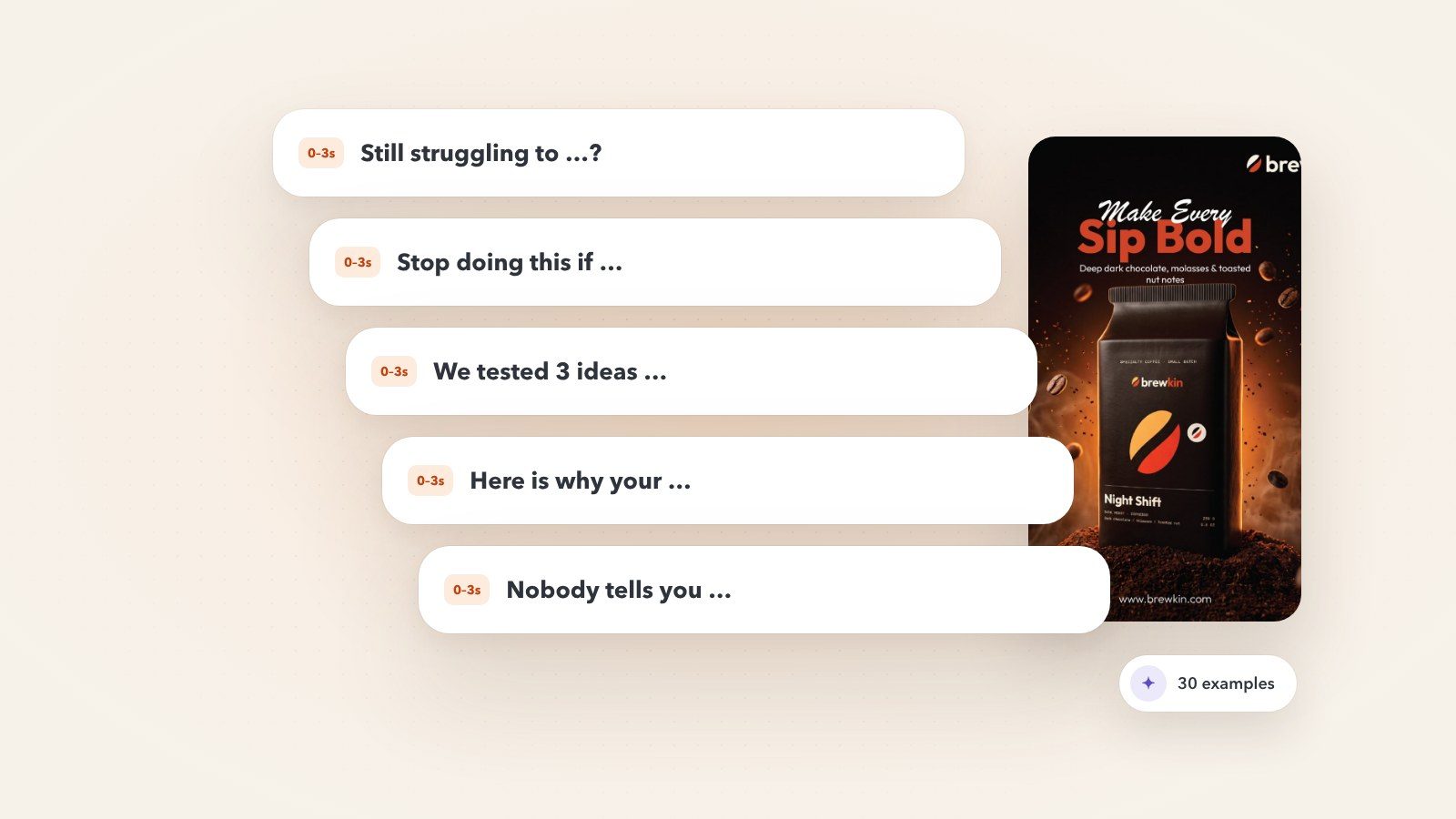
A video ad hook is the first 1–3 seconds of your ad. Its job is simple: stop the scroll, earn attention, and make the viewer want to keep watching. Without a strong hook, even a well-produced video can fail to generate clicks, leads, or sales.
The best video ad hooks are specific, relevant, and emotionally engaging. They speak directly to a customer problem, desire, objection, or curiosity. In this guide, you will learn how to write scroll-stopping hooks and see 30 examples you can adapt for your own campaigns.
What Is a Video Ad Hook?
A video ad hook is the opening moment of your ad. It can be a spoken line, on-screen text, a visual, a sound, or a combination of all three.
The hook should answer one question quickly:
“Why should I keep watching?”
If the viewer does not see a reason to stay within the first few seconds, they will scroll past. That is why the hook is one of the most important parts of a performance video ad.
Why Hooks Matter
Most people scroll quickly on social platforms. They do not watch every video from beginning to end. They decide within seconds whether an ad is relevant to them.
A strong hook can:
- Stop the scroll
- Increase watch time
- Improve engagement
- Increase click-through rate
- Reduce cost per result
- Improve conversion rate
- Help identify the best creative angle
A weak hook can make even a good offer invisible.
The best hooks are specific, relevant, and emotionally engaging.
What Makes a Hook Strong?
A strong hook is not just clever. It is relevant to the viewer.
The best hooks usually do one or more of the following:
- Address a specific problem
- Speak to a specific audience
- Make a bold claim
- Create curiosity
- Show a surprising visual
- Start with a result
- Challenge a common belief
- Highlight a benefit
- Ask a direct question
- Use a relatable story
For example, “Still struggling to get leads from your ads?” is more specific than “Check out our new service.” The first version speaks to a problem; the second version is generic.
Hook Formulas That Work
1. Problem Hook
This hook starts with the customer’s problem.
Example: “Still struggling to get leads from your ads?”
2. Result Hook
This hook starts with the outcome the customer wants.
Example: “Here is how we helped a brand double its leads in 30 days.”
3. Question Hook
This hook asks a direct question.
Example: “Do you know why your ads are not converting?”
4. Curiosity Hook
This hook creates curiosity.
Example: “Most brands get this wrong when creating video ads.”
5. Bold Claim Hook
This hook makes a strong statement.
Example: “Your ads are not failing because of your budget.”
6. Objection Hook
This hook addresses a common objection.
Example: “You do not need a big budget to test video ads.”
7. Story Hook
This hook starts with a personal or customer story.
Example: “I almost gave up on ads—until I changed this one thing.”
8. Comparison Hook
This hook compares two options.
Example: “AI video ads vs traditional production: which one should you choose?”
9. Mistake Hook
This hook highlights a common mistake.
Example: “Stop making this mistake if you want better video ads.”
10. Offer Hook
This hook leads with the offer.
Example: “Get 20 AI video ad variations for your next campaign.”
30 Video Ad Hook Examples
Here are 30 hook examples you can adapt for your own brand.
- “Still struggling to get leads from your ads?”
- “If you are tired of wasting money on ads, watch this.”
- “This is why your video ads are not converting.”
- “Most brands get this wrong when creating video ads.”
- “You do not need a big budget to test video ads.”
- “Here is how we helped a brand double its leads in 30 days.”
- “Stop doing this if you want better video ads.”
- “Do you know why your ads are not converting?”
- “This one change can improve your ad performance.”
- “If you want more sales, start with a better hook.”
- “Your ads are not failing because of your budget.”
- “Here is the fastest way to test video ad ideas.”
- “Most video ads fail because of this one mistake.”
- “If you want better results, focus on the hook.”
- “This is how top brands create video ads that convert.”
- “Still using one video for your entire campaign?”
- “Here is why your ads need more creative variations.”
- “If you want to scale your ads, start with testing.”
- “This is how AI can help you create better video ads.”
- “Do you know what makes a video ad stop the scroll?”
- “Here is a simple way to improve your ad performance.”
- “If you want more leads, focus on the first 3 seconds.”
- “This is why your video ads are getting ignored.”
- “Most brands waste money on ads because of this.”
- “Here is how to create video ads that actually convert.”
- “If you want better results, start with a stronger hook.”
- “This is the biggest mistake brands make with video ads.”
- “Do you know why your ads are not getting clicks?”
- “Here is how to turn attention into sales.”
- “If you want to grow your brand, start with better creative.”
How to Adapt These Hooks
Do not copy these hooks word for word. Use them as templates and adapt them to your product, audience, and offer.
For example:
- “Still struggling to get leads from your ads?” can become “Still struggling to get bookings for your clinic?”
- “This is why your video ads are not converting” can become “This is why your skincare ads are not converting.”
- “You do not need a big budget to test video ads” can become “You do not need a big budget to test skincare ads.”
The more specific the hook, the better.
Hook Examples by Industry
E-commerce
- “Still struggling with ___ ?”
- “This is why your ___ is not working.”
- “I tried ___ for 30 days. Here is what happened.”
- “Stop wasting money on ___ that does not work.”
- “Here is how to get better results with ___.”
SaaS
- “Still managing ___ manually?”
- “This is how ___ can save you hours every week.”
- “If you want to grow your business, start with ___.”
- “Here is why your team is wasting time on ___.”
- “This is the fastest way to ___.”
Local Services
- “Still looking for a reliable ___ ?”
- “This is why your ___ is not working.”
- “Here is how to get better results with ___.”
- “If you want to improve your ___, start here.”
- “This is how ___ can help you ___.”
Education
- “Still struggling to learn ___ ?”
- “This is why your ___ is not working.”
- “Here is how to get better results with ___.”
- “If you want to improve your ___, start here.”
- “This is how ___ can help you ___.”
How to Test Hooks
A simple testing framework is:
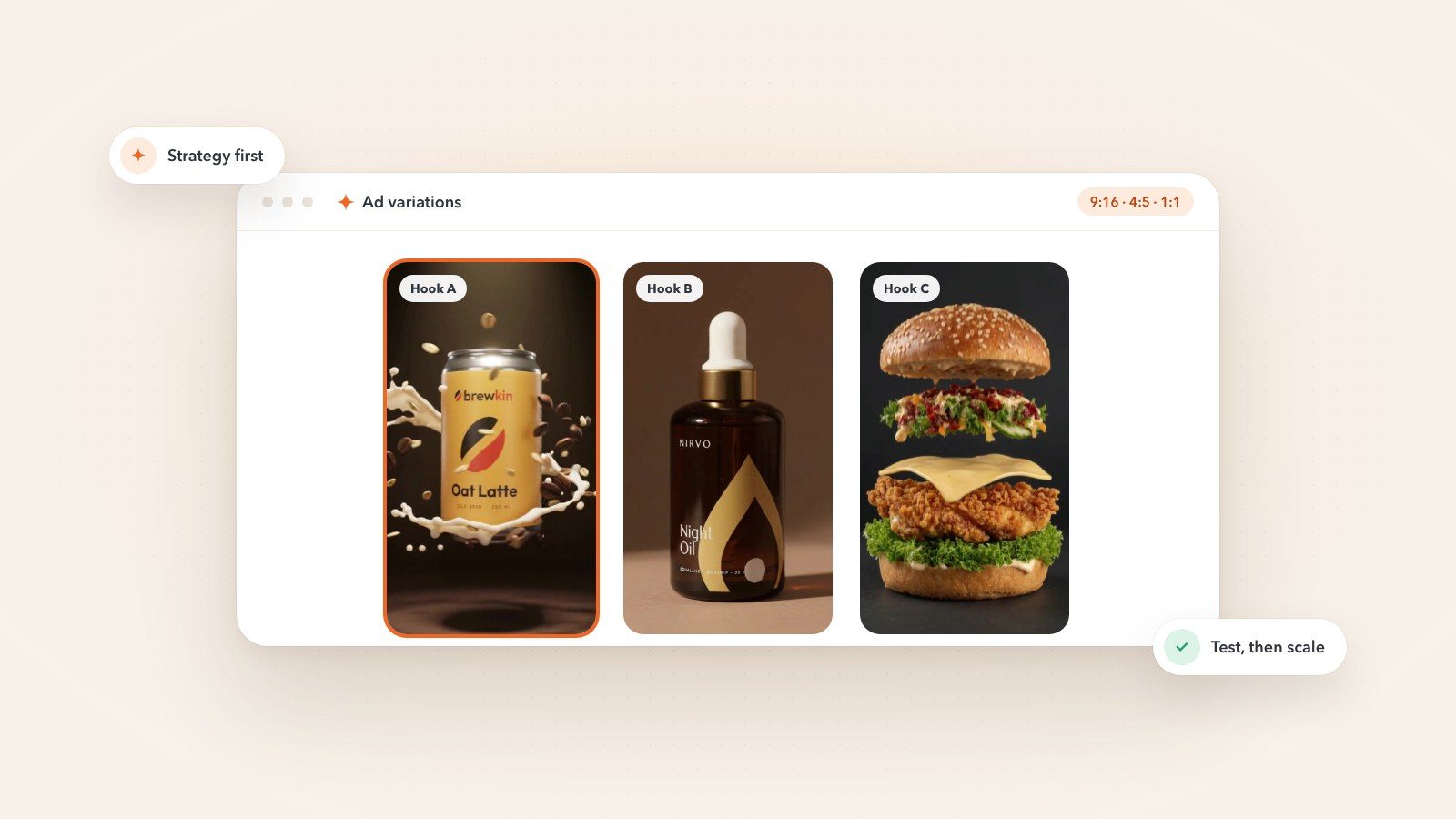
- Create 3–5 creative angles
- Make 2–3 hook variations for each angle
- Run the ads to a defined audience
- Track hook rate, CTR, cost per result, and ROAS
- Identify the winning angle
- Create more variations based on the winner
- Retire weak creative and refresh the campaign
For example, if a “problem-focused” hook performs better than a “product-focused” hook, create more ads around that problem. If a specific CTA performs better, test similar CTAs in future ads.
Metrics to Track
Track these metrics to understand hook performance:
- Hook rate
- 3-second view rate
- Thumb-stop ratio
- Click-through rate
- Conversion rate
- Cost per lead
- Cost per purchase
- ROAS
- Creative fatigue
Do not judge a hook only by views. A hook may get attention but fail to generate business results.
Common Mistakes to Avoid
Starting With the Logo
Do not start with your logo. Start with the customer’s problem, desire, or curiosity.
Using Generic Language
Avoid generic phrases like “Check out our amazing product.” Make the message specific to a customer problem, desire, or objection.
Making the Hook Too Long
Keep the hook short. The first 1–3 seconds should grab attention.
Ignoring Visuals
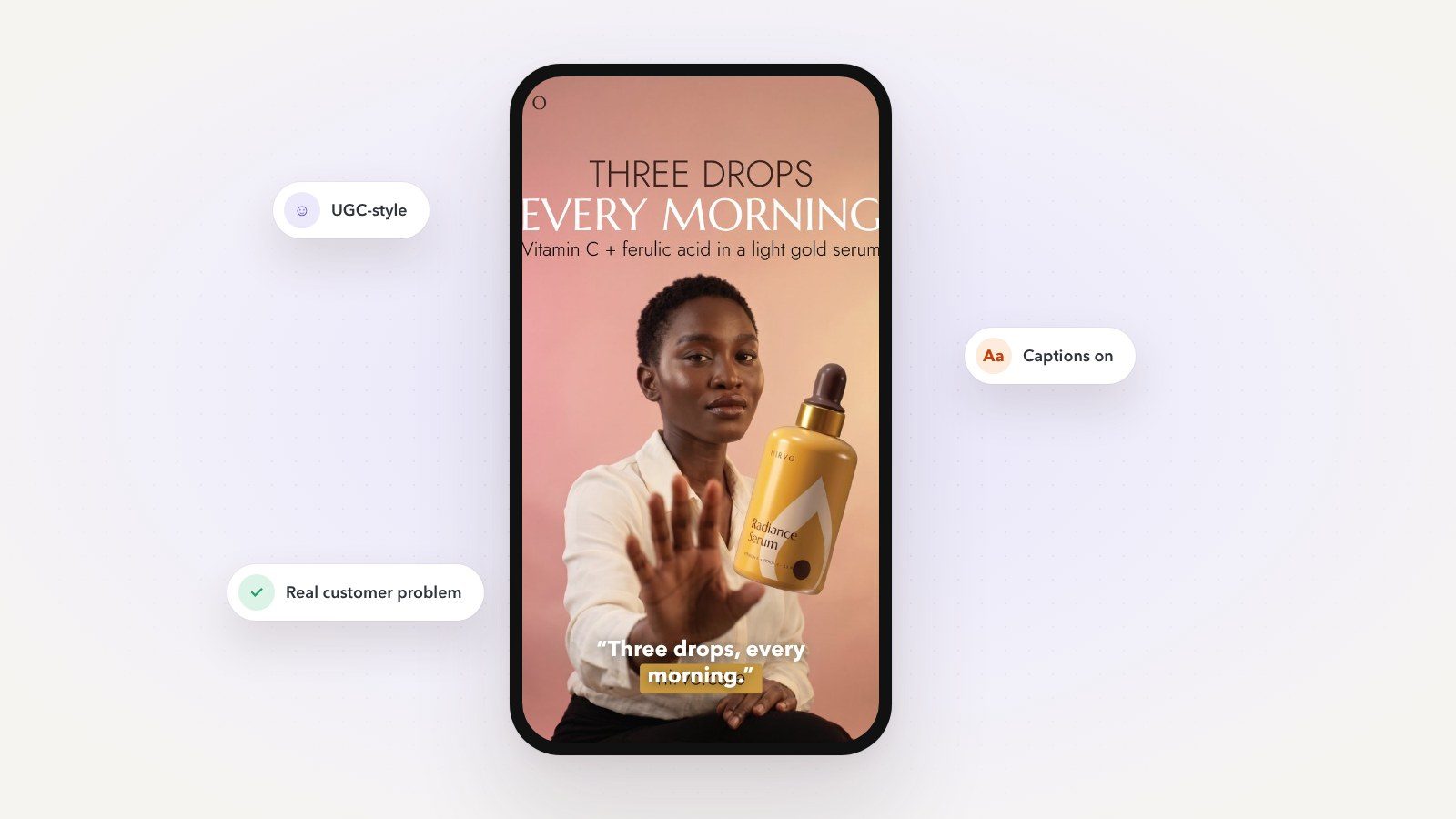
The hook is not only the spoken line. Use strong visuals, text, and sound to support the message.
Not Testing Variations
One hook cannot tell you what works. Create multiple variations so you can test what resonates.
How Asian Pixel Uses Hooks
Asian Pixel uses hooks as part of a broader performance creative system. The goal is not simply to create videos, but to create ads that support testing, learning, and business growth.
A strong hook system includes:
- Audience and offer analysis
- Customer pain-point research
- Creative angle development
- Hook variations
- Scriptwriting
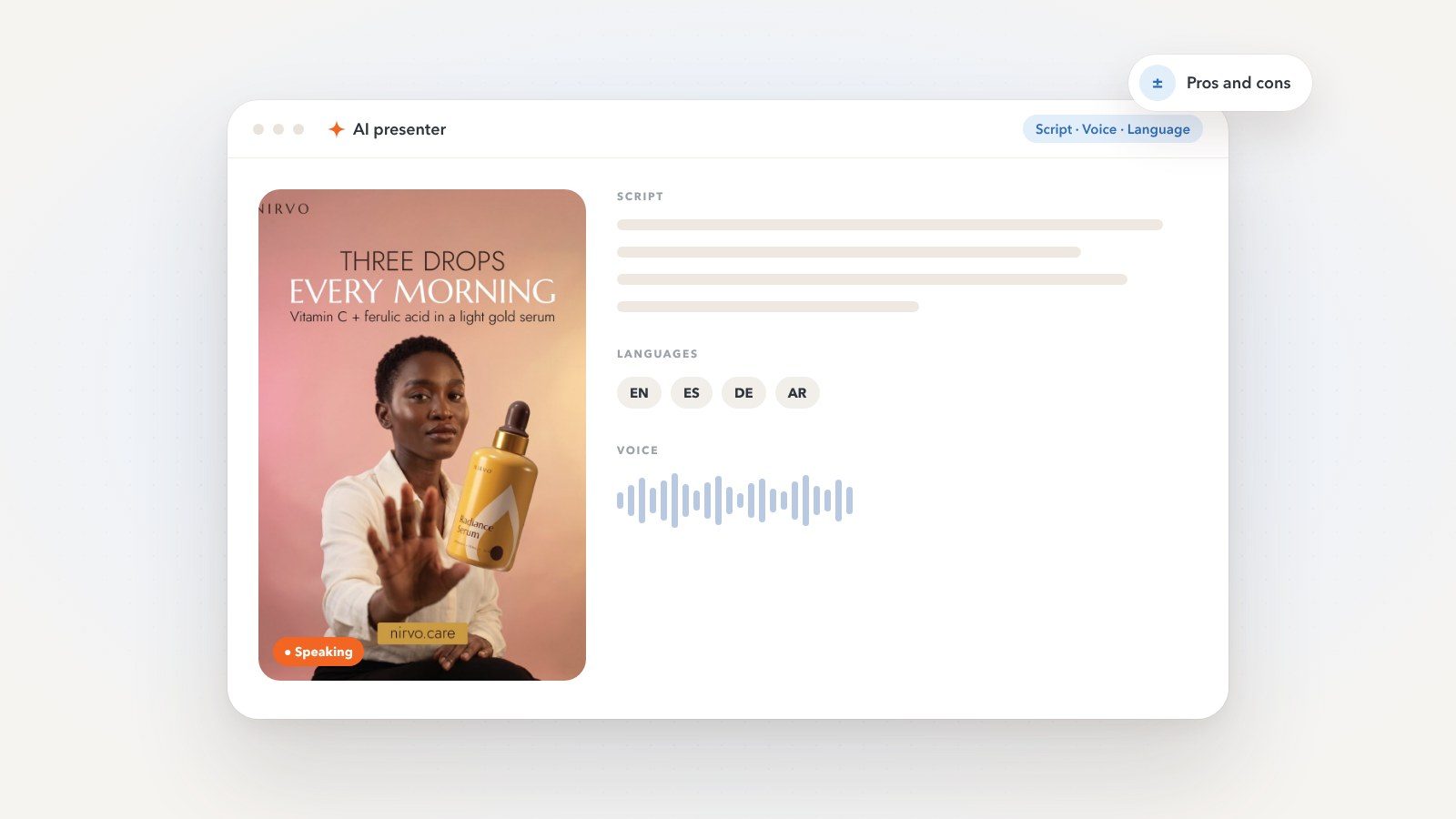
- AI-assisted production
- Captions and on-screen text
- Brand-consistency checks
- Creative testing
- Performance reporting
This approach helps brands create more variations, test faster, and identify the messages that drive results.
Final Thoughts
A strong hook is one of the most important parts of a video ad. It can stop the scroll, increase watch time, and improve conversion performance.
The best hooks are specific, relevant, and emotionally engaging. They speak directly to a customer problem, desire, objection, or curiosity.
If you want to get better results from video ads, focus on the fundamentals: a clear offer, a specific audience, a strong hook, a believable message, and continuous testing.
Frequently asked questions
What Is a Video Ad Hook?
A video ad hook is the opening moment of your ad. It can be a spoken line, on-screen text, a visual, a sound, or a combination of all three.
What Makes a Hook Strong?
A strong hook is not just clever. It is relevant to the viewer.